Last updated on May 9th, 2026 at 09:59 pm
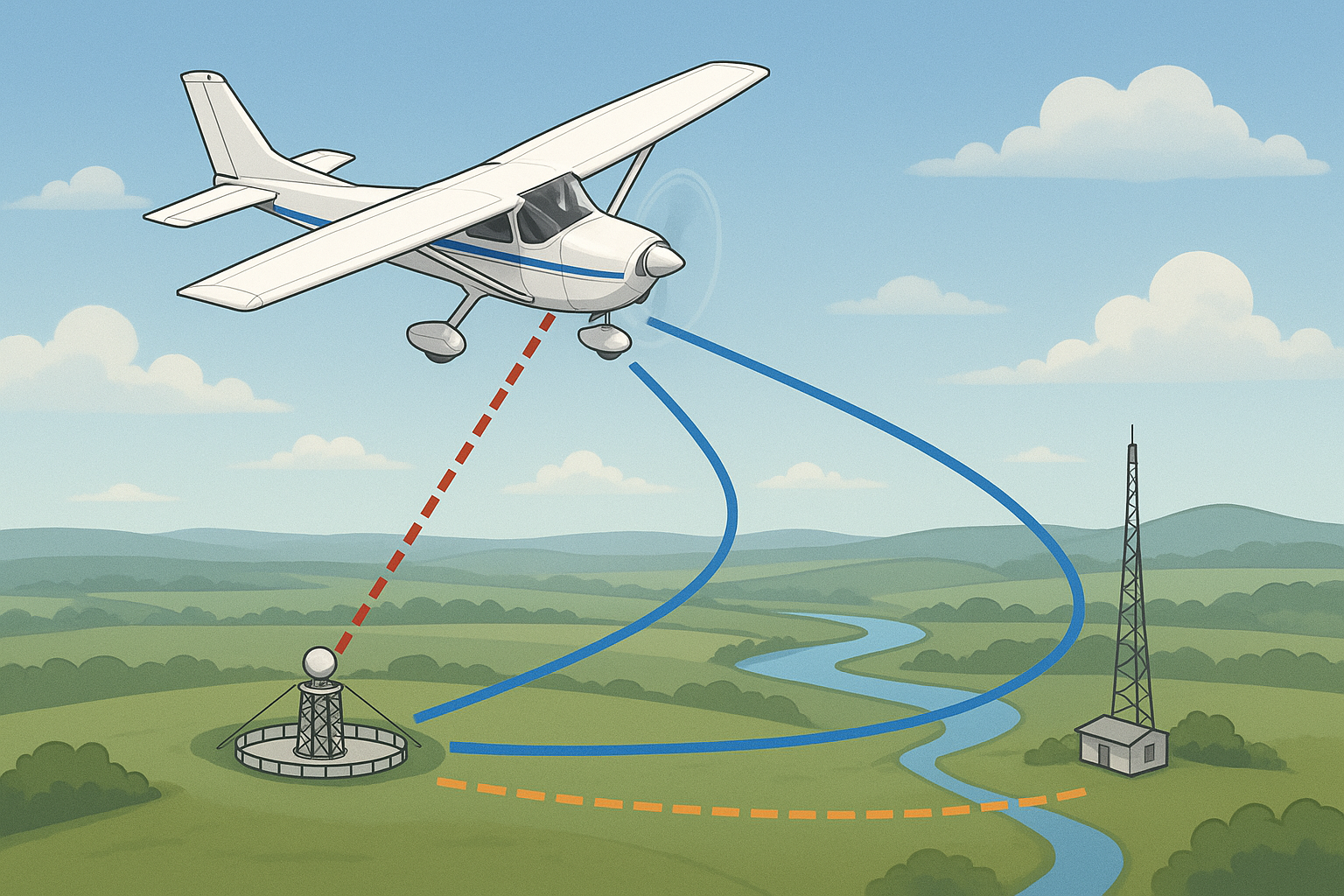
VOR, or VHF Omnidirectional Range, and NDB, or Non-Directional Beacon, are the bread and butter of traditional navigation. VOR relies on very high frequency radio signals to provide direction by comparing phases between two signals, giving a 360-degree range around the station. NDBs, on the flip side, broadcast a continuous signal in all directions and operate on a lower frequency. While they might feel a bit old-school, these tools still lay the groundwork for solid, reliable navigation — especially in non-GPS environments.
Both VOR and NDB systems have been pivotal in aviation, historically guiding pilots across continents before the digital age took over. Despite newer tech like GPS, these trusty systems remain essential, especially in remote areas where newer signal coverage might be spotty. Learn how real pilots still rely on traditional nav aids from the FAA’s Aeronautical Information Manual.
So, what really sets VOR and NDB apart? It mostly comes down to how precise and dependable each system is under different conditions. VORs are known for their accuracy, giving aircraft precise positioning and directional guidance via radials. NDBs, while reliable, are susceptible to interference from weather and terrain. They don’t provide directionality, and require the pilot’s interpretation using an ADF, or Automatic Direction Finder.
Each system has its strengths, contributing to an integrated navigational puzzle that pilots piece together with skill and experience. Understanding these systems isn’t just about learning old tricks — it’s about appreciating the evolution of airborne navigation and recognizing the tools at a pilot’s disposal.
Decoding Navigation: The Art of Interpreting Radials and Signals

Figuring out radials is one of those key skills that feels like a rite of passage for any pilot. A radial is simply a magnetic bearing from a VOR station. It’s like having a virtual spoke extending outward in all directions, and you’re trying to nail down your position relative to that spoke.
Now, when it comes to understanding those TO/FROM indicators, it’s all about context. These little flags on your navigation display tell you whether your aircraft is moving towards or away from a station, crucial for getting your heading right. Simply put, ‘TO’ means you’re headed towards the radial, and ‘FROM’ indicates you’re moving away. Sounds simple, right? But like most things in aviation, it takes a bit of hands-on practice to really click.
When you pass over a VOR or NDB, several things can happen. Most noticeably, you get a flip in your TO/FROM indicator, and depending on what you’re tracking, your needles might go wild for a hot second. These flips are natural and expected — a heads up that you need to update your navigation plan.
Getting these basics down is more than just a test of your patience. It’s about building confidence in how you interpret the signals and radials that these systems rely on. That confidence translates to solid navigation decisions and a smoother, safer flight operation every time you hit the skies. New to this? Try our Glossary of Flight Simulator Terms for quick definitions.
Mastering Techniques: Intercepting and Tracking Radials

Getting the hang of intercepting and tracking radials with a VOR might sound tricky, but it’s all about nailing down a solid routine. First up, you’ll turn to that OBS, or Omni Bearing Selector. This tool lets pilots set a desired radial to head towards or follow. The trick is learning how to dial in the right radial with the OBS knob — once you get the hang of it, the whole process starts to feel intuitive.
Once you’ve set your radial, the CDI, or Course Deviation Indicator, steps in. It tells you whether you’re drifting off course, and by how much. If the needle is pointing left, steer left to get back on track, and vice versa. The key is making gentle corrections rather than abrupt turns — keep things smooth and steady.
For NDB tracking, it’s all about reading the ADF needle, and making those slight heading changes to account for wind. Unlike VOR’s pinpoint accuracy, you have to anticipate and correct the drift, especially in strong wind conditions. Constantly monitoring your ADF needle and making small, calculated corrections helps you stay on course.
Real-world scenarios bring all this to life. Whether battling crosswinds or overflying terrain with limited visibility, mastering these techniques ensures safety and precision. It’s not just theoretical knowledge; it’s real-world application.
✈️ My First Real Lesson Using VOR in X-Plane 11
When I started practicing VOR navigation in X-Plane 11 using the Cessna 172, things didn’t fully click until I stopped relying on GPS and focused only on the instruments.
At first, I wasn’t fully sure what the indicators were telling me. But after a few attempts, something simple made it much clearer:
- The vertical line (CDI needle) shows whether you’re left or right of your selected course
- The goal is to keep that line centered
Once I focused on that, flying toward a waypoint started to make more sense.
Then I noticed something else:
- When I climbed or descended, the needle would start drifting again
- Even small heading or altitude changes could push me off course
That’s when it really clicked — staying on course isn’t just about turning the aircraft, it’s about keeping a stable and consistent flight path.
In simple terms:
👉 When the needle stays centered, you’re on course
👉 When it moves, you make small corrections — not aggressive turns
Practicing this without GPS forced me to actually understand what the instruments were showing instead of just following a magenta line.
🎥 VOR Practice Lesson (CDI Tracking in Action)
Here’s a short clip from that lesson — you’ll see the CDI line center briefly, drift off, and the corrections I had to make in real time:
👉 Notice how the needle doesn’t stay centered for long — that’s where small, steady corrections become important.
✈️ Real Practice: What Happened During the Lesson
During the same lesson, I initially managed to align the indicators correctly. The vertical line centered, and everything looked good. But after a short time, the line started drifting away again even though I thought I was on the right heading.
I was then asked to turn about 35 degrees to intercept the course. I followed that instruction, but the needle didn’t center perfectly right away. After making another small adjustment to the right, the lines finally aligned — but only briefly before drifting again.
That moment made something clear:
👉 VOR navigation isn’t about one perfect turn — it’s a continuous process of correction.
Even when you think you’ve nailed the alignment, small factors like heading, wind, or minor control inputs can push you off course again. The key is making small, steady corrections instead of chasing the needle aggressively.
It also showed me that instructions like “turn 30–35 degrees” are more of a guideline than an exact solution. You still need to read what the instrument is telling you and adjust accordingly.
🎯 Try This Yourself
Try flying a short route in the Cessna 172 using VOR only — no GPS. Focus on keeping the CDI centered and pay attention to how even small climbs or turns affect your position.
That’s where the real learning starts.
The Future of Navigation Training: Keeping VOR and NDB Relevant

In the age of GPS and FMS systems, you might wonder why VOR and NDB are still in the mix. Even with all the high-tech advancements, these systems hold educational value that’s tough to beat. They train pilots to be sharp, adaptable, and understand the foundational aspects of navigation.
Traditional navigation skills taught through VOR and NDB are crucial for producing well-rounded pilots. Mastering these methods makes one more prepared for any scenario, especially in aviation areas where GPS coverage might falter. Plus, they build a strong sense of situational awareness.
Flights take off in a digital world, but a solid grasp of the basics remains invaluable. By learning the ropes with older navigation techniques, pilots gain a safety net that complements modern tools. It gives pilots a solid fallback plan if high-tech tools glitch out or go offline mid-flight.
Furthermore, these skills fit well into training programs focused on building comprehensive aviation knowledge. They foster problem-solving abilities and precision, which pave the way for better decision-making. It’s about equipping today’s pilots with a toolkit that includes both time-tested and cutting-edge navigation strategies.
So, while the navigation landscape continues to evolve, VOR and NDB remain integral to developing robust skills and confidence. Check out FAA’s Pilot’s Handbook of Aeronautical Knowledge (Chapter 16) for in-depth learning on radio navigation techniques. By blending traditional and modern techniques, pilots are better prepared to handle whatever challenges they might face above the clouds.
Wrapping Up: Old-School Tools, Modern Relevance
At the end of the day, mastering VOR and NDB navigation isn’t just about ticking a box on your training checklist — it’s about developing true situational awareness and resilience as a pilot. Whether you’re flying online in a sim or preparing for real-world IFR ops, these systems still have a lot to teach us.
If you’re just getting started or want to sharpen your skills further, try setting up a short VOR-to-VOR flight in your favorite simulator and track your progress using raw data only — no GPS cheat codes. It’s a great way to boost your confidence and see just how far traditional navigation can take you.