
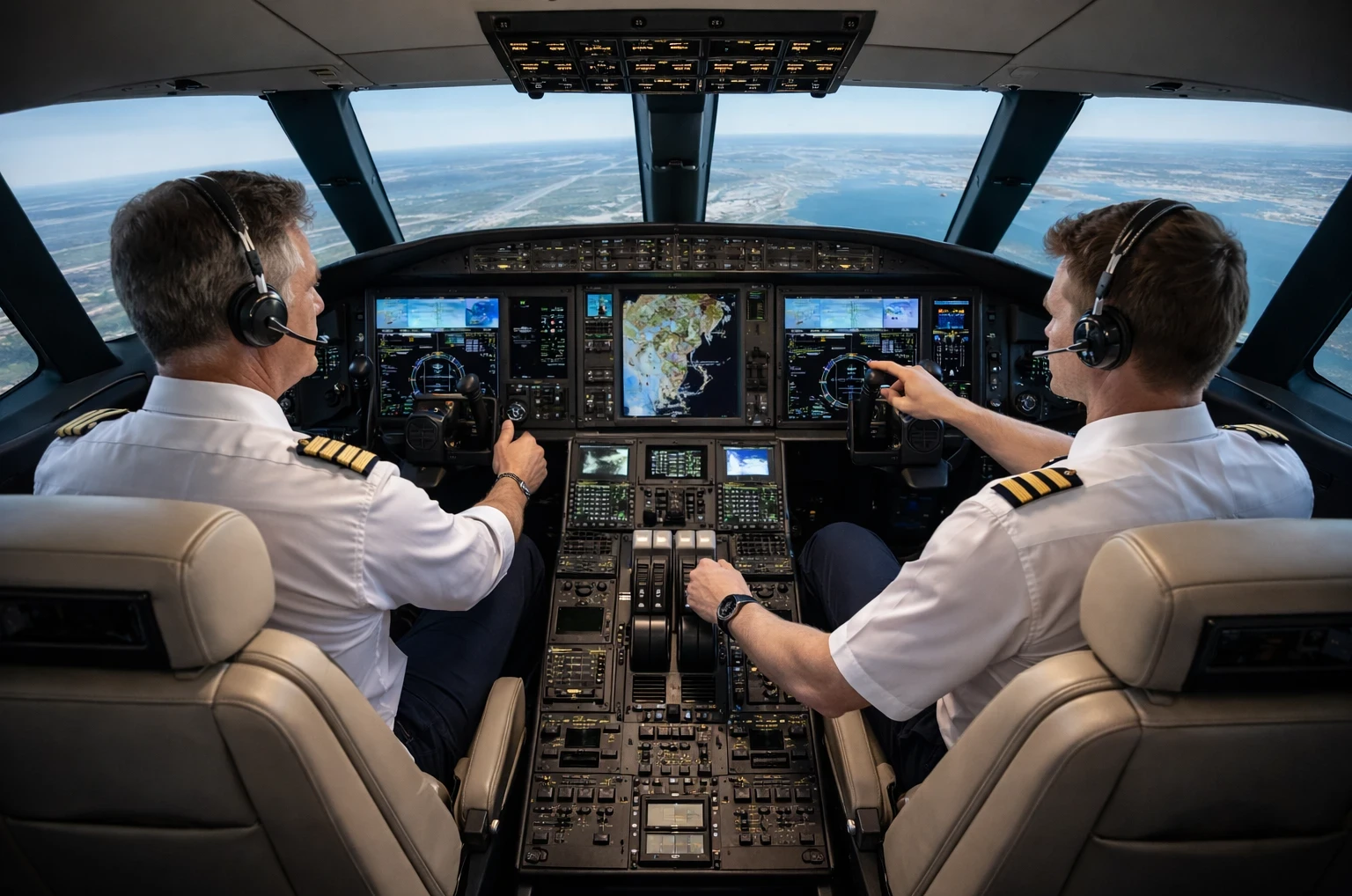
Diving into the world of business jets can be pretty intimidating, right? But here’s the kicker—flight simulators make this adventure not just exciting but smart and pocket-friendly too. These digital marvels offer a no-risk environment to get familiar with the skies. Unlike traditional in-flight learning, simulators cut out the fear factor. You can make mistakes, learn from them, and try again without the drama of a real cockpit scenario. This makes them the perfect playground for anyone looking to get comfy with high-altitude flying. (Related: How Realistic Flight Simulators Enhance Pilot Training).
Let’s talk cash. Real-world flight training isn’t exactly cheap. Fuel, maintenance, potential ramp fees—it all adds up. Business jet simulators slash these costs big time. You can hop into various situations without ever touching terra firma, saving your wallet and still getting the full pilot experience. With the advancements in technology, what you’re getting is almost like the real thing, minus the wear and tear on pricey equipment. (Check out: Building a DIY Home Cockpit on a Budget).
Now, not all jets are created equal. Each has its quirks, and simulators can be tailored to those specifics. This means you’re not just learning vaguely—you’re honing skills pertinent to the actual model you’re interested in flying. Whether it’s a G5000 setup you’re navigating or understanding the nuances of a Collins Pro Line, simulators paint a crystal-clear picture of what you’ll face in action. (Tip: Explore Garmin G3000/5000 avionics on Garmin’s official site).
Recent tech leaps mean simulators today are more lifelike than ever. It’s like stepping into a full-blown interactive movie set in the clouds. Current-gen setups with high-fidelity graphics and cutting-edge avionics replicate every knob, dial, and weather quirk you’ll face up there. This immersion is a game-changer for pilots wanting to venture into business jets, marking a transformation in how pilot training is approached. (Also read: Achieving Ultimate Realism With Custom Equipment).
Distinctive Flyaways: What Sets Business Jets Apart
Stepping into the league of business jets? It’s like going from a trusty hatchback to a sleek sports car—everything feels different, and that’s part of the charm. For starters, business jets cruise way higher and faster than their general aviation counterparts, leveling up to speeds and altitudes that push technology to the edge. We’re talking cruising around 41,000 feet or even higher, above commercial traffic, where the skies are usually calmer and more direct routes save time and fuel.
Let’s geek out for a second here: the avionics. Business jets are decked out with some cutting-edge technology. It’s like having the ultimate setup of gadgets and gizmos. Compared to general aviation aircraft, these jets have systems that will make any tech enthusiast’s heart skip a beat. We’re in the territory of advanced navigation, communication, and enhanced weather systems that ensure you’re prepared for almost anything. Understanding these systems transforms how you handle the skies.
Then there’s the finesse involved in piloting one. These aren’t lumbering airliners; they’re responsive, zippy aircraft that demand precision. A gentle nudge on the controls, and you’re cutting through the sky. Simulators help hone this finesse, teaching pilots to respond to such sensitive handling without stress.
And let’s not forget the versatility: business jets can access a broader range of airports, including those out-of-the-way aerodromes that larger jets can’t even dream of landing on. This ability to reach remote, smaller airports opens up a world of possibilities for travelers and pilots alike. So if you’re planning a spontaneous getaway to a secluded locale, business jets are your answer. Simulators reflect this capability, offering the chance to practice approaches into these more challenging runways.
Keen on cross-country hops at breakneck speeds or dreamy over-ocean flights without layovers? Business jets can do that with grace and style. Simulation training dives deep into these unique features, boosting your confidence and competence twofold. It’s not just about flying; it’s about mastering the art and science of a wholly exceptional aviation experience.
Navigating the Cockpit and Mastering Avionics
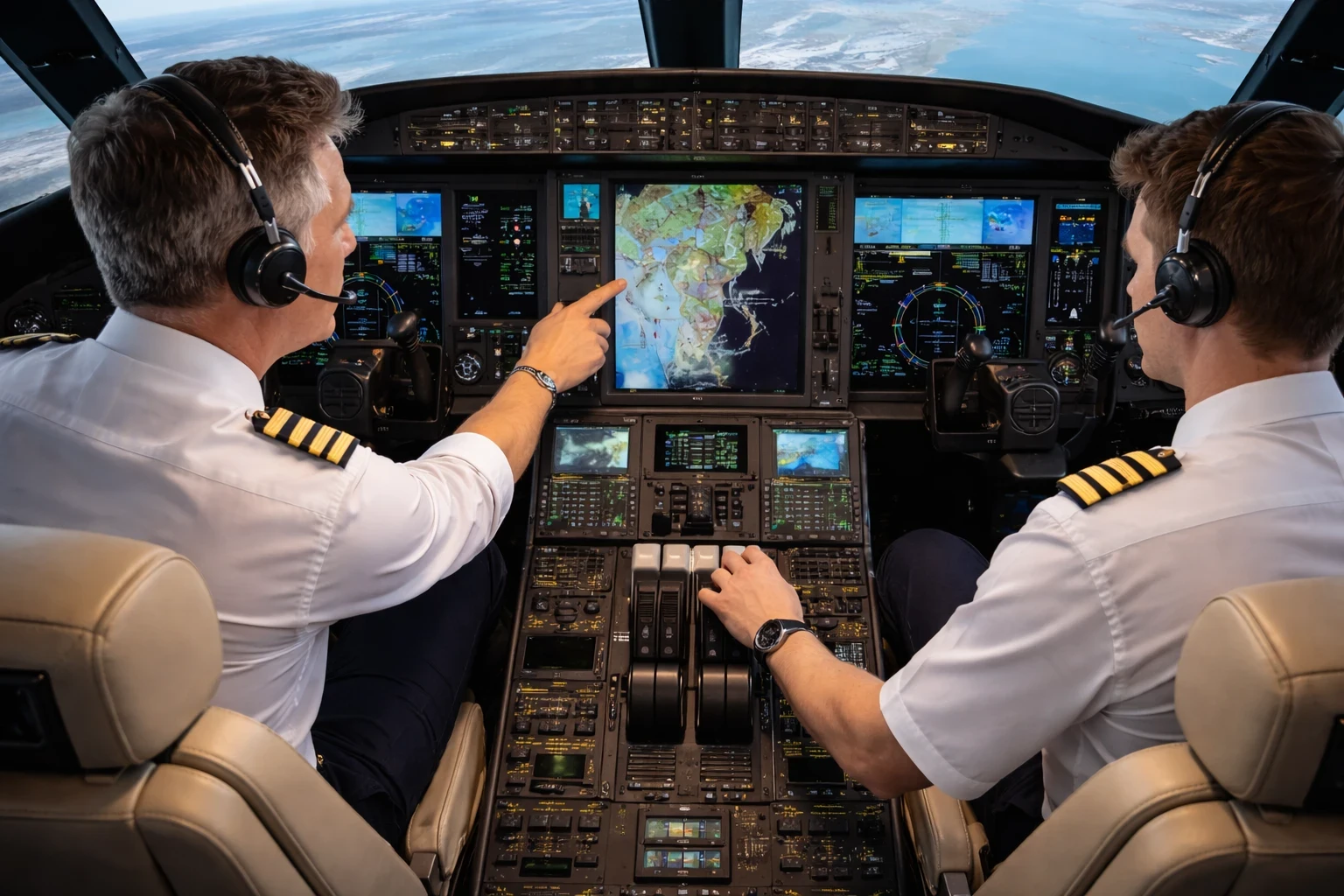
Getting your head around the cockpit of a business jet is a bit like stepping into a high-tech control room. With the likes of Garmin G3000/5000 or Collins Pro Line avionics systems at your fingertips, the cockpit is where the magic happens. These setups are packed with sophisticated features—think touch screens, integrated systems, and intuitive interfaces designed to create a seamless flying experience.
Now, simulations are a key player here. They give you the chance to understand and get hands-on with these complex systems without ever leaving the ground. Familiarization with cockpit flows, from startup to shutdown, gets embedded in muscle memory, something that’s invaluable when you’re up in the air with time-sensitive decisions to make.
Each button, switch, and toggle has a purpose, and simulators provide the safe space to get all this down pat. This isn’t just about learning where things are located. It’s about making swift, informed decisions, boosting your confidence for real-life situations. The goal? To become second nature in operating and integrating these advanced systems into your flight routine.
One major advantage of simulators is they allow you to rehearse the entire suite of avionics. Plan a route, handle communications, adjust your radar—these aren’t just theoretical exercises. They’re skills you need in an actual business jet. By the time you’re done practicing in a simulator, navigating the cockpit will feel as familiar as navigating your hometown.
Simulators replicate various avionics scenarios, letting you see firsthand how changes impact your flight objectives. Whether it’s making mid-flight route adjustments or responding to weather data in real-time, simulation training gives you the foresight that ensures you’re prepared for anything. Playing around in this virtual sandbox enhances your understanding, making cockpit operations run like clockwork.
Advanced Flight Management Systems and Automation
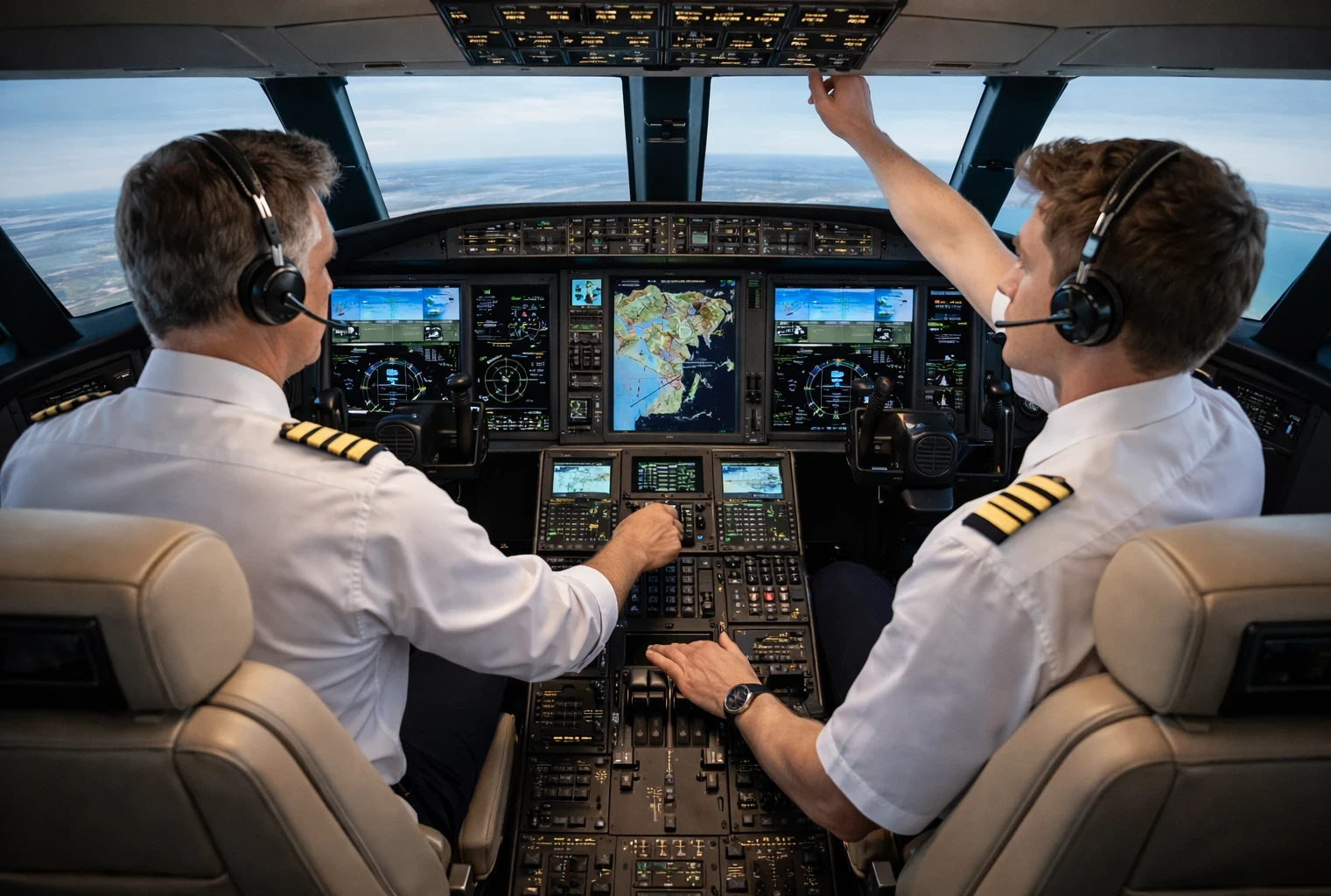
So you’re ready to conquer the skies in a business jet? Let’s talk about the brain behind the operation—Flight Management Systems (FMS). These systems are pivotal for modern business jets, handling tasks from navigation to performance management.
Here’s where simulators again prove invaluable. They let you dive into the intricacies of FMS programming without the stress of real-time pressure. Entering flight plans, adjusting for weather conditions, and even re-routing on the fly are all skills you can finesse in a simulator environment. You get to learn through trial and error, something not easily afforded once you’re in the air.
Business jets rely heavily on automation to optimize efficiency and safety, and getting comfortable with automation tools like SID/STAR processes, VNAV, and LNAV is crucial. Simulators provide a realistic platform to practice setting up these processes, ensuring precision and competence when you’re up high.
Let’s be real—at first glance, all this tech talk can feel like alphabet soup. But spend a bit of time with it in a simulator, and suddenly it starts to click. The more you play around with it, the more it sticks—until punching in flight plans and tweaking performance settings feels like second nature.
With simulators, you can also experiment with performance entries. Any input mistake you could make in a real-world scenario is quickly corrected and learned from here, without any real-world consequences. It’s all about refining your workflow, building confidence, and understanding exactly how automation can best serve you and your flight mission.
These tools let business jet pilots execute precise operations, from departure to arrival. And if something goes off script, knowing your FMS inside out lets you quickly adapt, emphasizing the importance of practice in these high-tech simulations.
Simulating Real-World Challenges and Scenarios

Handling real-world flight challenges from the safety of your couch might sound like a dream—except it’s totally possible with simulators. Whether it’s handling a sudden engine failure or responding to rapid depressurization, simulations offer a controlled environment to practice what you hope you’ll never face during an actual flight.
When things go sideways, your reaction time matters. Simulators let you run those “oh no” moments over and over until your hands know what to do before your brain even finishes the thought. That kind of prep? Priceless. You get to rehearse procedures like emergency descents or dealing with system malfunctions without the actual risks involved, which is truly a game-changer.
Beyond emergencies, simulators also prepare you for daily flying challenges with realistic mission scenarios. From corporate hops to long-range flights, simulators can replicate a variety of flights that business jet pilots might encounter. Whether it’s managing a multi-leg itinerary or navigating to a remote airport, these scenarios provide a virtual playground for honing your skills. (For creative practice ideas, see: Guide to Scripting Custom Missions and Challenges).
Enhancing the realism of your simulation experience with real-world data also brings practice closer to reality. Tools like SimBrief give you access to authentic flight planning, while SkyVector and real-world weather integration keep your simulations as true to life as possible. This means every practice run helps you build genuine flight experience without stepping into the cockpit.
Whether it’s a smooth run or a curveball situation, every sim session layers on real confidence. It takes the edge off those “what-if” moments and replaces panic with “been there, done that” calm. That’s the kind of cool you want in the skies. It’s not just about learning how to react; it’s about fine-tuning your instincts so that you’re ready, no matter what the skies throw your way.
✈️ Ready to Level Up Your Jet Sim Game?
If you’re serious about getting comfortable with high-performance jets, there’s no better place to start than the simulator. Practice the tricky stuff, explore advanced avionics, and build real confidence—all without burning a drop of fuel.
Want to take it further?
👉 Explore our guide to advanced avionics for seasoned sim users
👉 Check out the top-rated throttle quadrants for business jets
👉 Or upgrade your sim rig with essential hardware picks
✉️ Got questions or want to share your jet setup? Drop a comment or connect with us—we’d love to hear how your journey’s going!