
Last updated on March 24th, 2026 at 08:22 pm
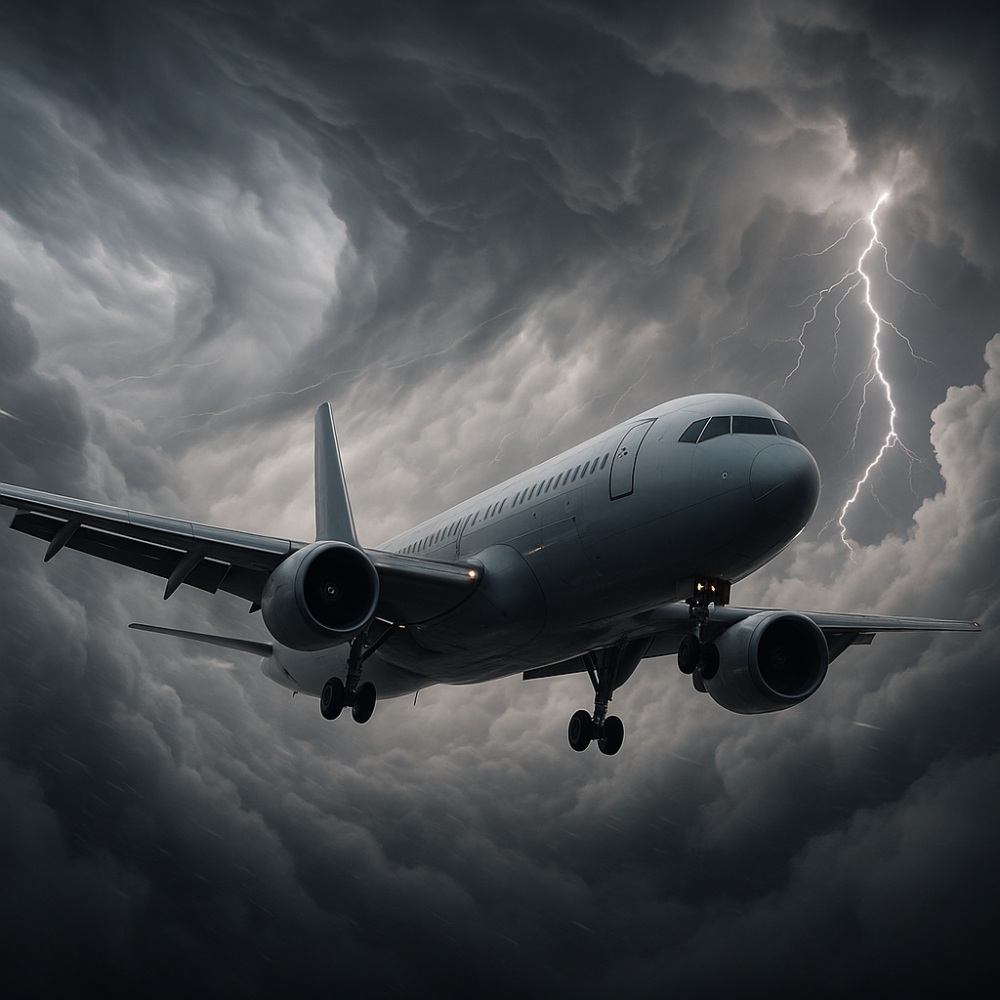
I’ve experienced turbulence both in real life and in the simulator, and it’s always something that immediately grabs your attention. I remember a flight where the shaking lasted nearly an hour — unpredictable and impossible to ignore.
Later, I tried flying through storm conditions in Flight Simulator X, and as soon as I entered the storm, the aircraft started jolting. The moment I exited, everything smoothed out again. That was my first real exposure to how simulators model instability.
More recently, I experienced this at a much deeper level in X-Plane 11, where turbulence felt more responsive and required constant control input—especially during storm conditions.
Turbulence is essentially uneven movement of air that can jolt your aircraft mid-flight, turning a smooth flight into a hands-on challenge. And honestly, that’s part of what makes flight simulation so engaging — it keeps you alert and actively involved.
Why It Matters to Sim Users
When flying in a simulator, turbulence is one of the moments where things stop feeling predictable. During one of my flights in storm conditions, I had to constantly adjust my inputs just to keep the aircraft on course. It wasn’t something I could ignore or leave on autopilot — I had to stay fully engaged the entire time.
That’s what makes turbulence so valuable in flight simulation. It forces you to actively control the aircraft, just like a real pilot would, instead of simply cruising through the sky.
Getting the hang of turbulence is one of those milestones that shifts you from beginner to “I’ve got this” pilot. It’s not just about riding out the bumps — it’s about reading the sky, reacting with finesse, and fine-tuning your control inputs on the fly. If you’re still building your core flying skills, our Building Confidence: Your First Virtual Takeoff and Landing guide is a great place to start. For sim pilots, these moments are where the real learning (and fun) kicks in — turning turbulence from a nuisance into a confidence builder.
Types of Turbulence: Diverse Airborne Encounters
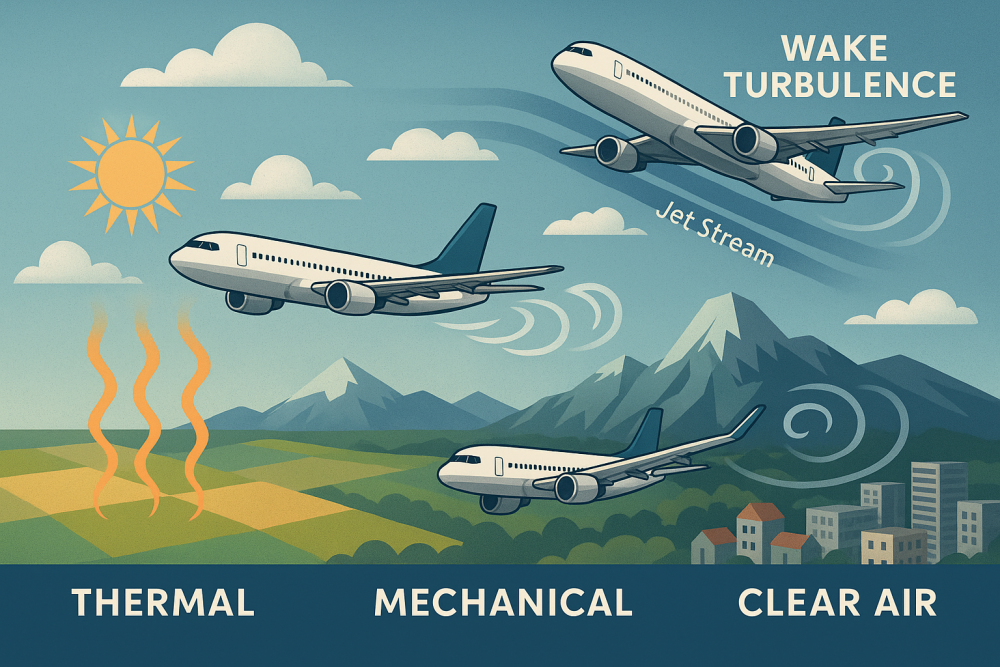
Turbulence isn’t one-size-fits-all — it comes in a variety of forms, each with its own quirks and challenges. Let’s break them down. Thermal turbulence, also known as convective turbulence, is all about heated air. When the sun’s out and frying the pavement, warm air rises, causing those familiar bumps during a midday flight. It’s common over cities and fields where heat builds up quickly.
Then there’s mechanical turbulence. Picture the wind getting all tangled up with terrain or buildings. Those pesky interactions create disturbances that pilots need to handle carefully. Flying low over a city or through a mountain pass? This type will keep you alert.
Up in the cruising altitudes, clear air turbulence, or CAT, lurks. It’s the invisible kind, not tied to visible cues like clouds. It often hangs out near jet streams, catching unsuspecting pilots off guard with sudden jolts. Makes you realize just how alive the sky can be!
And let’s not forget wake turbulence. This one comes from the trailing vortices of large aircraft. Imagine the swirling currents behind a big plane — now think about flying a smaller one right behind it. Yep, managing that takes skill!
Every type of turbulence brings its own twist, helping you sharpen different flying skills as you go. Whether you’re dodging thermals or wrestling wake turbulence, each challenge adds a new layer to your virtual flight experience — and makes you that much more ready for whatever the sim skies throw your way. Want to see how weather plays into these challenges? Check out Exploring Realistic Weather Mods for Added Challenge.
Environmental Influences: Earth’s Meteorological Symphony
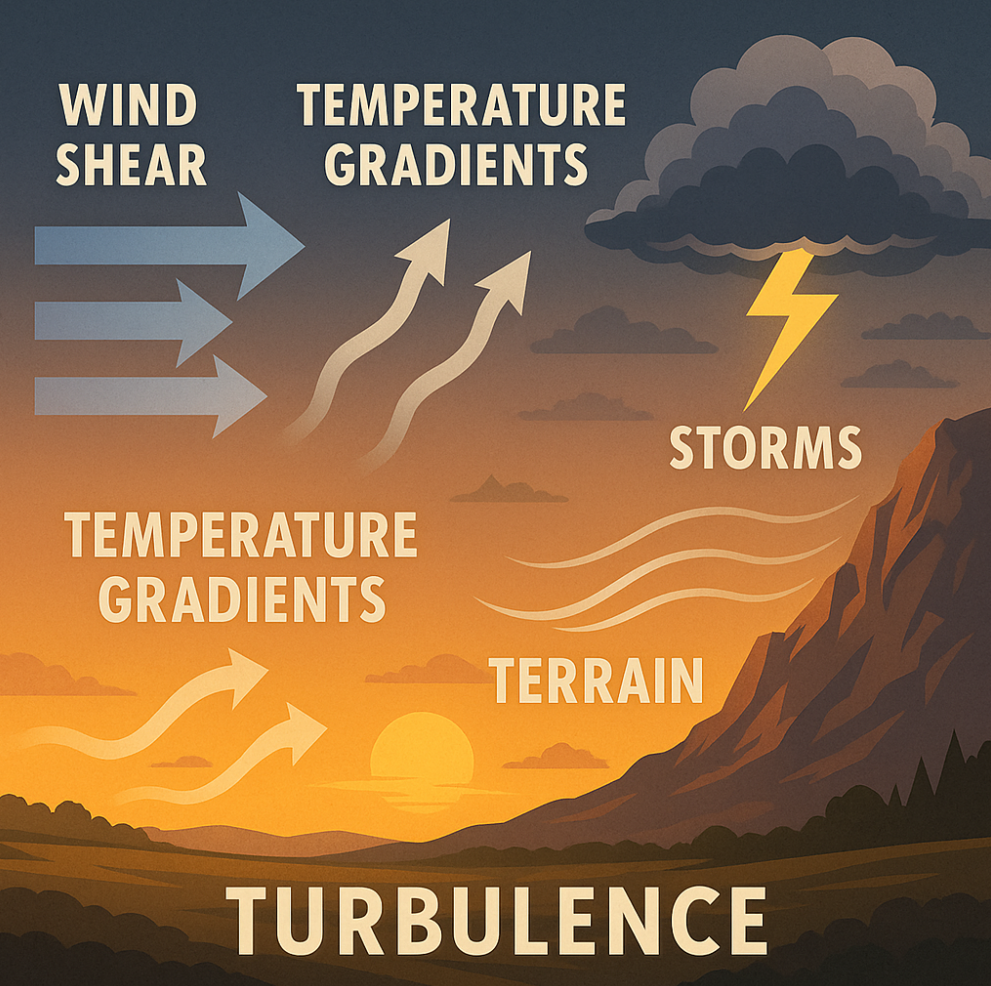
Turbulence is heavily influenced by environmental conditions like wind shifts, temperature changes, and storms. During storm flights, I noticed how quickly conditions can change, especially when flying through areas with strong wind variations and lightning.
Temperature gradients also play a huge role. When temperatures shift rapidly over short distances, the air can get quite chaotic. Think of it like walking into a room with different A/C settings — that jolt you might feel is similar to what happens in the sky.
Storms are the heavy hitters in the turbulence world. Thunderstorms bring along their own set of disturbances. Fly too close, and you’re in for a ride with powerful gusts that command respect and caution.
The time of day adds even more flavor to the turbulence mix. Midday heat might kick up thermal turbulence, while evening can bring winds that gradually calm down, offering a smoother journey.
Lastly, terrain has its say in how planes move through the air. Mountains can disrupt the airflow, causing sudden and unpredictable changes. Flying close to or over them challenges pilots to brace for impact, literally. Understanding these environmental plays helps flight sim enthusiasts anticipate and react, bringing you one step closer to piloting like a pro. For more insight into how different conditions affect flight dynamics, see our Understanding the Basics of Aerodynamics in Simulators.
Simulating Turbulence: Realism in the Digital Skies
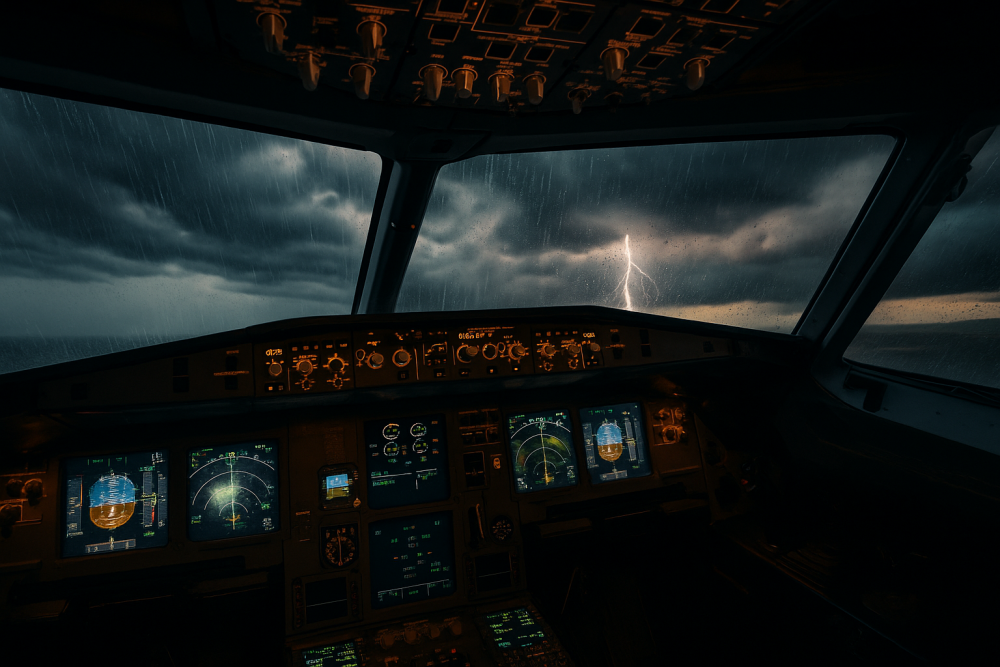
When it comes to flying in a simulated environment, capturing the essence of turbulence is crucial to keeping things real. Simulators today do a pretty stellar job of this, with platforms like MSFS 2020/2024 leading the charge. These games integrate live weather data from Meteoblue, ensuring that every gust and jolt mirrors real-world conditions happening outside right now. If you want to dive deeper into how this works, check out our guide on integrating real-time weather data into your flight sim.
MSFS isn’t the only game in town though. X-Plane 12 is another powerhouse, using advanced airflow modeling to recreate how turbulence affects an aircraft. From mechanical turbulence around tall buildings to the high-altitude whispers of clear air turbulence, it covers a full spectrum. This fidelity makes every flight feel unique, as if you’re injected directly into the ever-changing rhythm of the skies. If you’re serious about pushing realism further, our Achieving the Ultimate Realism with Custom Equipment article dives into the hardware side.
For those looking to amp up their simulator’s realism, these add-ons can make a noticeable difference:
- Active Sky – Enhances real-time weather and atmospheric conditions, making turbulence and wind behavior feel more dynamic and realistic.
- REX Weather Force – Improves weather visuals and injects more detailed atmospheric effects, helping simulate changing conditions more accurately.
- XPRealistic – Focuses on how turbulence feels inside the aircraft, adding camera movement, vibrations, and effects that mimic real-world flight physics.
Incorporating turbulence accurately in simulators challenges pilots to think on their feet, adapt quickly, and stay engaged throughout a flight. It’s not just about pressing a few buttons and letting the autopilot do the rest — it’s actively engaging with the sky’s untamed energy.
🎬 Storm Flight Example – Cessna 172 in X-Plane 11 (Turbulence Test)
To show how turbulence actually feels in a simulator, I recorded a flight over New York City in storm conditions with thunder, lightning, and heavy turbulence. You can see how constant control inputs are needed to keep the aircraft stable.
Turbulence as a Skill Developer: Sharpening Pilot Expertise
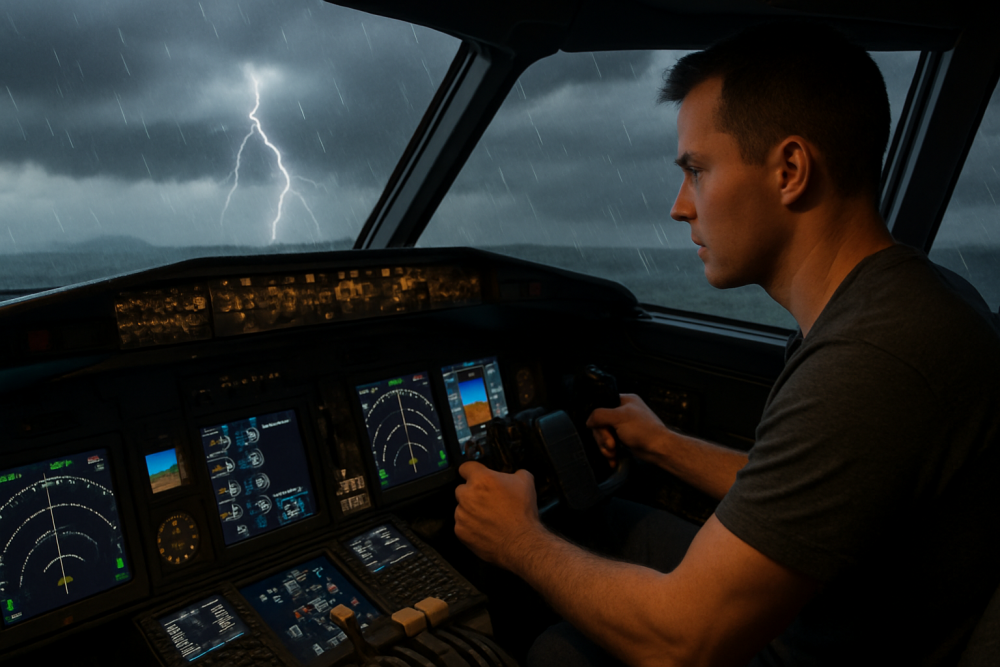
Facing turbulence in flight simulators isn’t just about bracing for bumps; it’s an opportunity to polish your flying skills. Managing turbulence demands a hands-on approach, pushing you to refine how you handle the controls.
During my storm flight in X-Plane 11, I realized that overcorrecting made the aircraft harder to control. Small, steady inputs worked much better than aggressive corrections.
That grip-you’d-better-get-it-right experience helps build the foundation for smoother flying, turning you into a more adept virtual pilot.
In the realm of simulators, turbulence is a teacher that never takes a day off. By presenting you with constant challenges, it encourages better manual flying. You’re not just cruising on autopilot — each flight becomes a lesson in micromanagement and attention to detail, preparing you for everything from casual flights to high-stress landings.
Weather planning becomes a fine art when dealing with turbulence. You learn to read the skies, anticipate potential disturbances, and adjust your route accordingly. If you want to practice realistic flight preparation, our Developing a Realistic Flight Plan guide walks you through it step-by-step. Developing these skills adds depth to your simulation experience, making you think like a real pilot — always planning, always ready to adapt.
Emergency reactions are another critical area where turbulence helps build your expertise. Sudden shifts in conditions hone your ability to make quick decisions, ensuring that you’re prepared for anything the sky throws your way. With practice, those frantic moments become second nature, boosting your confidence.
Scenarios like hand-flying during gusty landings become less daunting. Once a challenge supported by your trusty simulator, now you’re using turbulence to test performance differences, whether you’re piloting a nimble light aircraft or a hefty jet.
🛬 Wrapping Up: Ready to Ride the Skies?
Turbulence isn’t just a shake of the wings — it’s a chance to grow as a virtual pilot. Whether it’s a jolt in a thunderstorm or a subtle nudge from high-altitude winds, these moments challenge you to engage more deeply with your simulator. And with the right tools, knowledge, and mindset, you’ll not only handle turbulence — you’ll thrive in it.
After flying through storm conditions in the simulator, I started to see turbulence differently. It’s not just a challenge — it’s one of the best ways to improve control and confidence as a pilot.
So next time you boot up your sim, don’t shy away from the bumps. Embrace them. Test your skills, tweak your technique, and enjoy the ride — because that’s where the realism really lives.
This post does a fantastic job of highlighting how turbulence adds realism and challenge to flight simulation, making each flight truly immersive. I love how it breaks down different types of turbulence and explains their unique effects both in real life and in simulators. It really shows how turbulence sharpens a pilot’s skills beyond just handling bumps. What advice would you give to someone who’s new to dealing with turbulence in their flight sim and wants to improve their manual flying skills?
Thanks, Hanna! Glad you enjoyed the post.
Yeah, turbulence can definitely feel a bit scary at first — even in a sim. For anyone new to it, I’d suggest starting with smaller aircraft like a Cessna 172 and setting the weather to light or moderate turbulence. It’s a great way to get used to the feel of it and slowly build your manual flying skills without getting overwhelmed. Once you’re more comfortable, you can crank it up and really test your handling!