
Last updated on February 25th, 2026 at 09:09 am
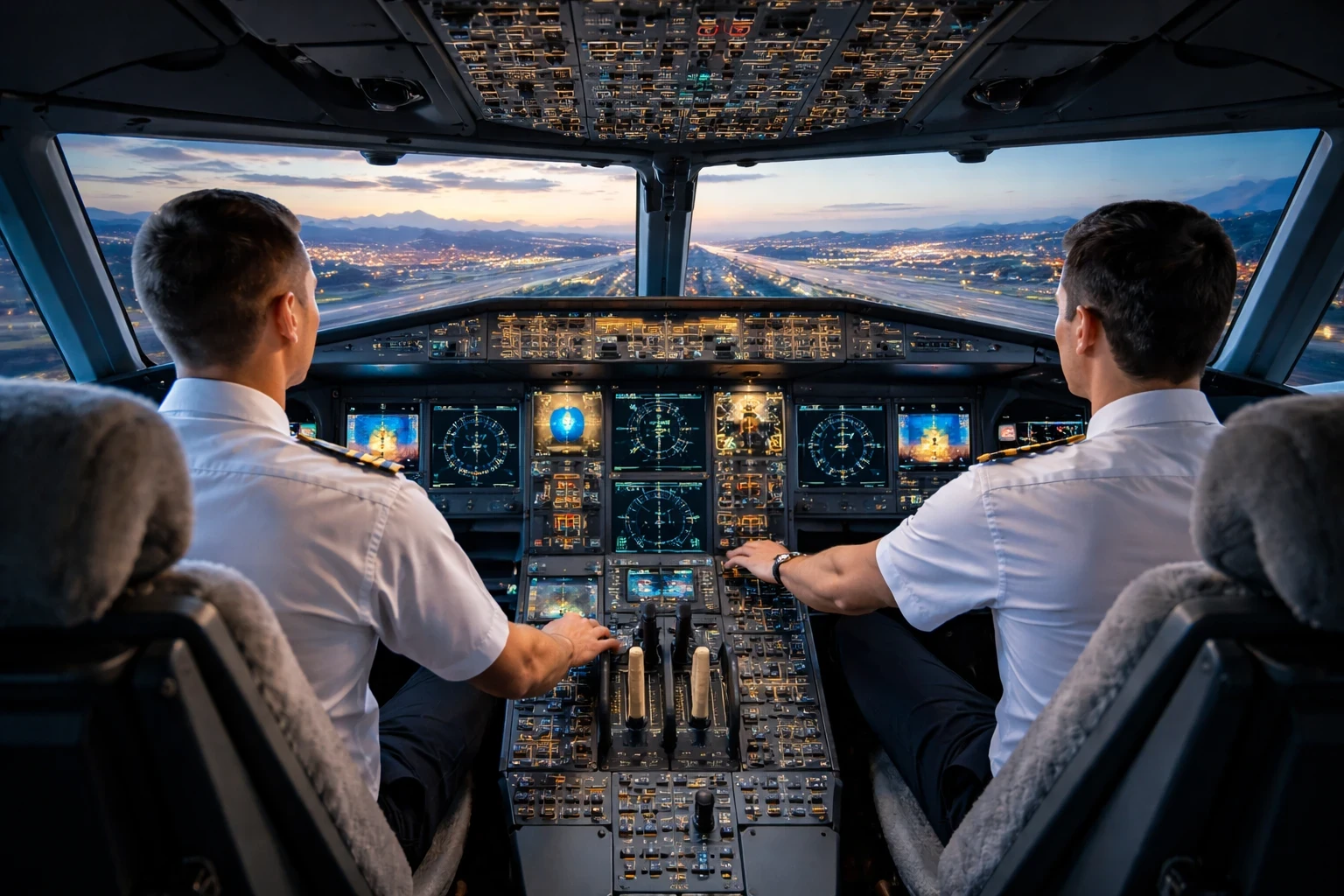
If you’re aiming to command something like the Airbus A320 or Boeing 787, a type rating isn’t optional—it’s your ticket in. These machines aren’t your average aircraft; they’ve got their own systems, quirks, and personalities. A type rating proves you’ve done the homework and can fly them safely and confidently. Why? Think of type ratings as a specialized badge of honor, a certification showing that you’ve mastered that particular aircraft’s systems and quirks. We’re talking different beasts flying these giants compared to standard planes.
Every aircraft brings its own flavor to the skies. The Airbus A320, with its fly-by-wire tech, feels almost like you’re flying through software, while the Boeing 787 wraps you in cutting-edge comfort and glass-cockpit efficiency. Understanding these nuances isn’t just helpful—it’s what makes you a pro.
Now, the nitty-gritty: type ratings are required by law. Regulatory bodies like the Federal Aviation Administration (FAA) and the European Union Aviation Safety Agency (EASA) have made it so. They’re the folks who outline what’s required for pilots to fly specific aircraft safely. They issue the rules that ensure you’re not only prepared but also legally permitted to handle these flying machines.
Your type rating journey digs deep—real deep. You’ll explore everything from the aircraft’s frame to its most intricate systems. It’s intense for a reason: you’re preparing to handle a complex aircraft, possibly with hundreds of passengers on board.
The world of type ratings opens doors to flying some of the most sophisticated airplanes out there. It’s not just about the prestige; it’s making sure that you’re the best pilot you can be when handling such complex technology.
The Evolution of Simulation in Pilot Training
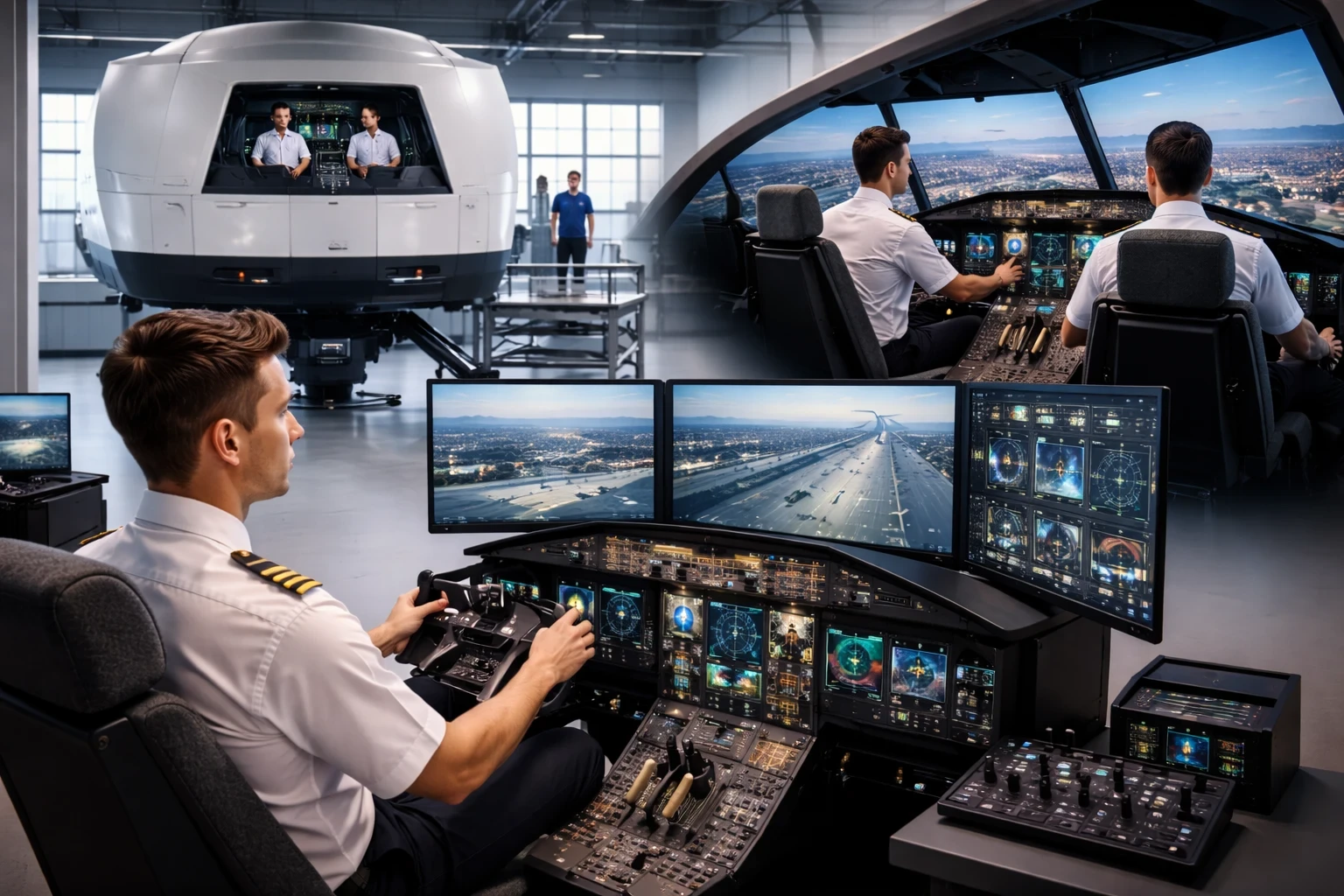
Using simulators isn’t just about fun flying games; they’re a key part of pilot training for commercial aircraft. The simulators approved by the FAA and EASA, specifically the Level C/D ones, are where the real stuff happens. Based on CAE’s training standards, pilots get a chance to experience situations as close to actual flight conditions as possible without leaving the ground. Pilots get a chance to experience situations as close to actual flight conditions as possible without leaving the ground.
Back in the day, pilot training was all about real-world experience with minimal technology to back it up, but that’s changed big time. We’ve moved to advanced simulation, which has revolutionized how pilots train. Modern simulators include everything from runway scenarios to in-flight emergencies, all in a controlled environment. 👉 Exploring Advanced Avionics for Seasoned Sim Users pairs well with this if you’re curious about how evolving tech impacts pilot decision-making.
Once you step into an FAA or EASA-approved simulator, it’s a whole new world. You’re dealing with full-motion platforms that mimic real physics—right down to the bump of a hard landing or the feel of a crosswind. It’s about as close to the real thing as you can get without actually lifting off.
And hey, it’s not all about the motion rigs. Fixed-base sims and procedural trainers do a ton of heavy lifting early on. They’re great for learning cockpit flows, button positions, and SOPs—without the pressure of a bouncing flight deck.
Using these simulators, both full-motion and fixed-base, helps pilots build essential skills before they have to do it all for real. This practice reinforces muscle memory and ensures they’re well-prepared to handle the unique challenges of each aircraft they’ll fly.
👉 For beginners working their way up, see Getting Started With Flight Simulation: A Step-by-Step Guide.
Preparing for Advanced Sim Simulations: Essential Pre-Flight Studies
Before setting foot in those fancy simulators, nailing your pre-sim study is key. Dive into the Flight Crew Operating Manuals (FCOMs), systems, and Standard Operating Procedures (SOPs) like they’re your new best friends. Understanding these documents inside and out is gonna make your time in the simulator way more effective.
It’s not just about cramming checklists or system diagrams. It’s about knowing how to think through problems when things don’t go by the book. That “why” behind every switch and warning light? That’s what separates a sim operator from a real pilot mindset.
Books and digital resources offer tons of insights and tips, so grab every opportunity to study ahead of time. According to the Wikipedia entry on type ratings, these certifications are required for pilots to operate certain aircraft types and often involve extensive simulator training before actual aircraft operations.Consider these resources your survival guide before jumping into simulator sessions. You’ll thank yourself later when you’re cool and collected during high-pressure sim scenarios.
Don’t underestimate the power of home simulator setups, either. Many pilots use Microsoft Flight Simulator (MSFS) or X-Plane at home for checklist practice and flow reviews. Nothing beats a bit of practice using these platforms when you’re solidifying your knowledge. They’re perfect for reinforcing what you’re learning and ensuring it sticks.
👉 If you’re building out your gear, check out Achieving Ultimate Realism With Custom Equipment.
Preparation is the name of the game if you want to make the most of your simulator sessions. A thorough understanding of the aircraft systems and procedures can turn potentially daunting scenarios into manageable tasks. You’ll walk into that simulator knowing your stuff, and that’s half the battle won.
Simulation Training: From CRM to Crunch Time Scenarios
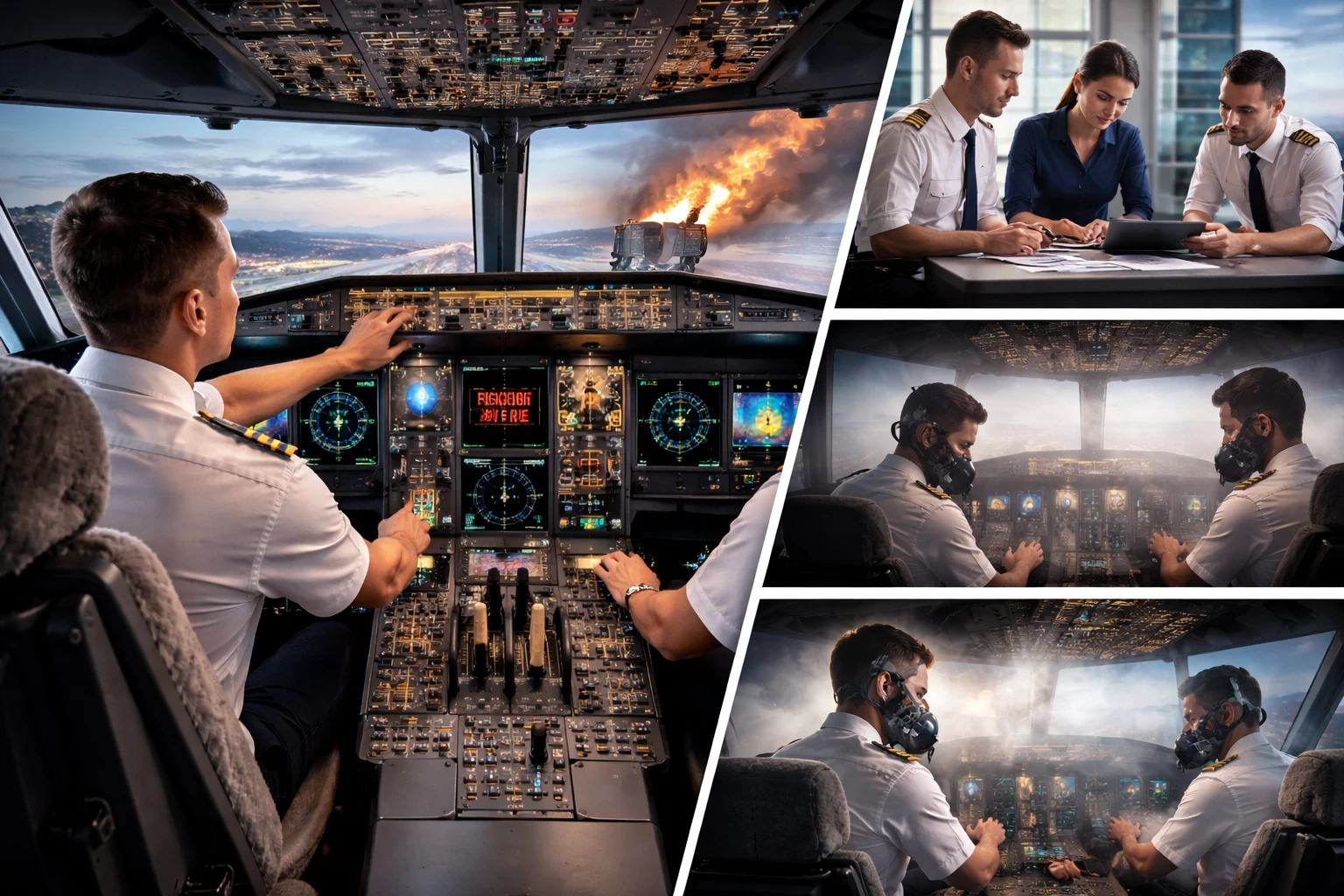
Being in the simulator isn’t just about flying the plane—it’s about flying as a team. That’s where Crew Resource Management (CRM)comes into play. It’s all about communication, workload management, and smart, coordinated decision-making under pressure. According to the FAA’s CRM Advisory Circular, CRM training helps pilots develop the interpersonal skills needed to make the best use of all available resources—people, procedures, and equipment—especially when the unexpected hits.
CRM actually has its roots in NASA research. Based on findings shared in NASA’s Spinoff archive, early studies revealed that many accidents stemmed from miscommunication or poor coordination in the cockpit—not mechanical issues. That led to CRM becoming a core part of how airlines train crews today, especially in simulators.
When sim sessions recreate crunch-time situations—like an engine fire or hydraulic failure—you quickly learn how vital good teamwork really is. Practicing these emergencies in a safe, repeatable environment lets you work through the stress and refine your response with a clear head.
Then there’s LOFT—Line Oriented Flight Training. Think of it like a full-length dress rehearsal. You’ll simulate entire flights, from pre-flight to parking brake, following real-world airline procedures. These sessions challenge you to blend CRM with sharp flying skills, making decisions in real-time while dealing with unexpected changes mid-flight. It’s pressure testing in the best way—and it turns you into the kind of pilot who can handle anything with confidence and coordination. 👉 You might also enjoy Simulation Training For Realistic Emergency Scenarios if you’re exploring how to push realism during training.
Immersing yourself in these scenarios is one of the most dynamic aspects of simulator training. Every session improves your decision-making skills and helps you learn to manage pressure with grace. These experiences build up your confidence and competence, prep you for anything the skies might toss your way.
Remember, practicing in full-motion sims doesn’t just test your skills. It builds that all-important muscle memory, making sure your responses are instinctive rather than reactive when it really counts. It’s like a dress rehearsal for the real performance, turning simulations into second nature when faced with the unexpected.
Beyond the Sim: Enhancing Skills through Scenario-Based Training
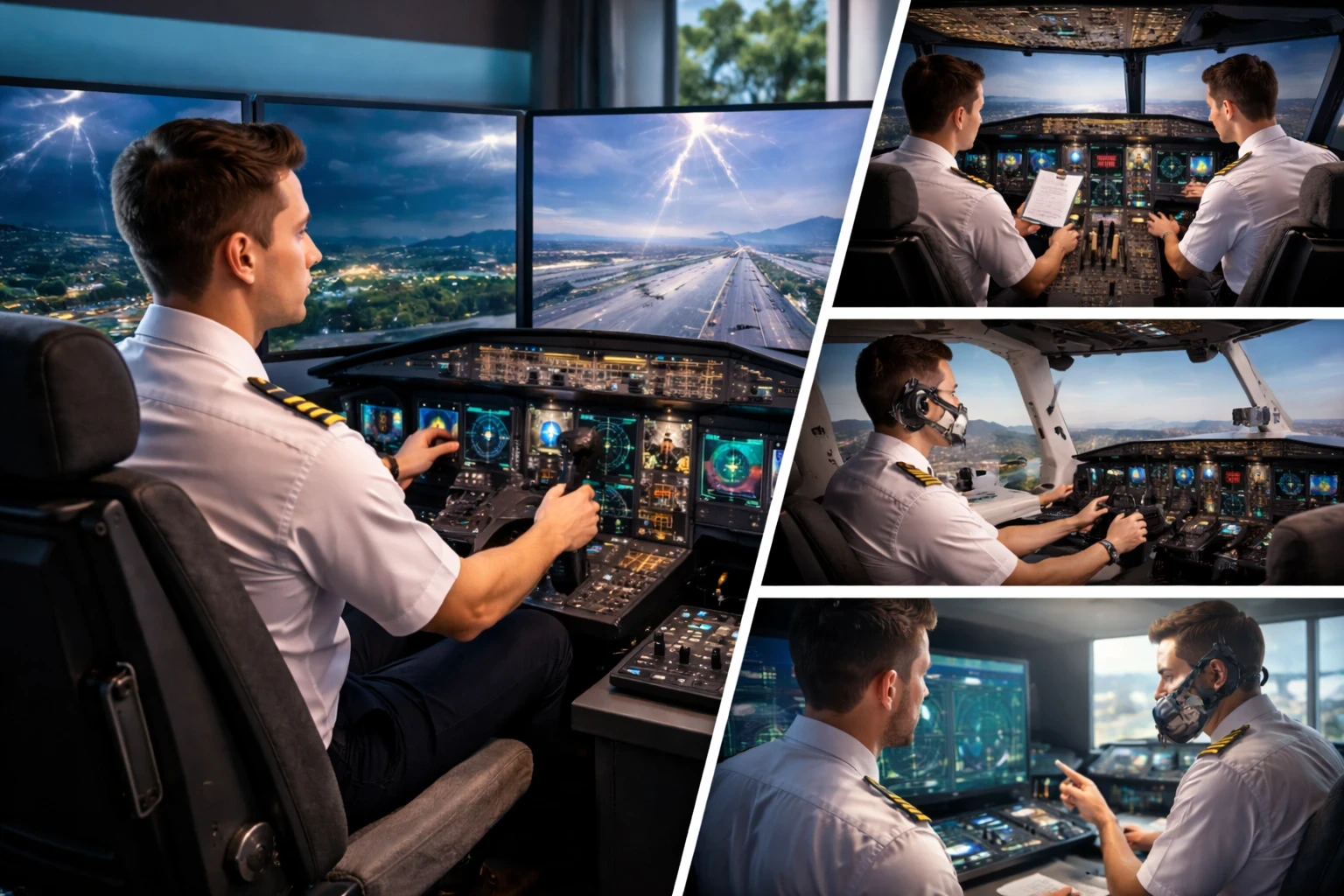
Scenario-based training is where things really start to click. It’s not just about memorizing systems or flows—it’s about thinking on your feet when things don’t go as planned. The more you expose yourself to unexpected situations in the sim, the better you get at making fast, confident decisions. When the pressure’s on, it’s your adaptability that sets you apart—and that’s exactly what this kind of training builds.
Full-motion simulators are fantastic for boosting your confidence. They give you the chance to build those necessary muscle memory skills, leaving you feeling assured when tackling complex tasks. Each move and decision you make in the sim builds a foundation for real-world flight situations.
Flexibility is everything in the cockpit, and scenario-based training really drives that home. It teaches you to stay sharp, think ahead, and shift gears the moment something changes. Whether it’s a last-minute runway switch or an engine hiccup mid-flight, this kind of training helps you roll with it—calmly, confidently, and without skipping a beat.
Don’t overlook the value of reinforcing your skills with tools you have at home. Platforms like MSFS and X-Plane aren’t just video games for enthusiasts. They serve as excellent resources for practicing checklists and flow procedures, letting you reinforce what you’ve learned in a personal environment. 👉 How To Select The Right Flight Simulator For Your Needs is a good read if you’re still figuring out the best platform for your training goals.
Building these skills through continuous practice in every platform available, including home setups, gives you a well-rounded experience. This continuous learning cycle helps you keep your skills sharp and ready for anything the skies might throw your way, ensuring you’re always at the top of your game. 👉 And when you’re ready to expand your setup, Best Throttle Quadrants For Various Aircraft Models can help you level up your hardware for deeper immersion.
🧭 Ready to Take the Next Step?
Getting your type rating is more than just ticking a box—it’s a deep dive into high-level aviation skills, and advanced simulation is your training ground. From mastering cockpit flows to handling in-flight emergencies with confidence, every sim session brings you closer to flying like a pro.
Whether you’re prepping for your first type rating or just pushing your simulator sessions to the next level, staying sharp and consistent is what sets you apart. 👉 Check out more guides and gear reviews at Flight Sim Essentials—your co-pilot for all things simulation, training, and tech that helps you fly smarter.