

When most people fire up a flight sim, they naturally drift toward the same familiar places—New York, London, Paris, the usual “postcard” destinations. But the sim world is huge, and honestly, we barely scratch the surface. There are entire regions nobody talks about, and flying there can completely change how you experience the sim. If you’ve ever read our Exploring the World’s Iconic Aviation Routes From Home – Navigation, Weather, And Planning post you know how familiar patterns can become routine — deep skies and unseen airports break that cycle.
When I say “underrepresented regions,” I mean places in the sim that don’t get the same scenery love as North America or Western Europe. Huge parts of Africa, the Pacific Islands, and South America are still running on basic default meshes, so you don’t get the handcrafted detail we’re used to. But that doesn’t mean these places aren’t worth flying — it just means they’ve been overlooked. Enhancing these areas with high-resolution terrain and photogrammetry addons from community sites like flightsim.to can make a world of difference and push these routes into something memorable.
There’s definitely a scenery imbalance in the sim world. Developers pour most of their time into North America and Western Europe, so places outside those zones don’t get the same photogrammetry treatment. Photogrammetry can make cities look insanely realistic, but many regions still rely on older default mesh—and that’s where the experience starts to feel different. You can explore how scenery quality affects immersion and challenge in other posts, like Uncommon Airports To Simulate Difficult Landings – Realistic Approach Challenges In Flight Sim, which also highlights how terrain and lack of precision aids can test your skills.
So why do these areas get ignored? Usually it comes down to demand and data. Developers don’t think enough simmers fly there, and without strong interest, nobody invests in better scenery. It becomes a loop: no detail → no interest → still no detail. But that’s exactly why exploring these places feels fresh.
Flying in these lesser-known regions gives you a totally different experience. It pulls you away from the usual “popular” routes and drops you into scenery and challenges you don’t normally see. It’s basically a chance to reset your flying routine and discover something new.
Navigating the Variability of Global Aviation Infrastructure
Flying in regions with lower-quality terrain data can be a surprise. The Digital Elevation Models (DEM) just aren’t as detailed, so mountains and valleys can look soft or rounded instead of sharp. It doesn’t break the experience, but it definitely changes how approaches feel, especially in rugged terrain. You might find it interesting how terrain mesh resolution can vary dramatically by area — some simmers use third-party terrain enhancement packages to improve this for remote regions.
The VOR and NDB beacons, which are crucial for navigation, are also less dense, testing your pilotage and navigation skills. Think of these tools as traditional roadmaps that help guide the way when you’re cruising thousands of feet in the air. Without them, it becomes a whole different ballgame focusing on landmarks and natural geography. If you’d like to sharpen these techniques, our internal guide on precision navigation (VOR & NDB) offers a deep dive into how to interpret radio signals without relying on modern GPS.
Fewer radar systems and Air Traffic Control (ATC) coverage mean pilots are pretty much on their own to a certain extent. This relies heavily on personal accountability for keeping track of other aircraft and staying on your planned flight path. It’s kind of like riding a bike without training wheels – a great opportunity to grow your skills kicking reliance on automation to the curb.
Adapting your flight plans to these shifts can feel like a puzzle, connecting dots without all the rules in place, and that’s the thrill of it! It calls for a mix of traditional pilot skills and a good understanding of the terrain to make safe decisions on the fly. Immersing yourself in these challenges sharpens your real-world piloting instincts.
Terrain Mesh & Elevation Accuracy: Realism and Challenges

Venturing into less developed flight sim regions means facing challenges with the accuracy of terrain meshes. Digital Elevation Models (DEM) are your go-to for understanding this terrain, but in many underrepresented areas, they aren’t as high-res as simmers might like. That often translates to mountains and valleys that look more like dough blobs than sharp features calling for experienced adjustments. This issue isn’t just simulated — even discussions in official flight sim forums highlight how default mesh can appear less detailed compared to enhanced scenery data.
When you’re coming in for a landing, inaccurate terrain can throw off entire approach procedures. You might find yourself higher or lower than planned, which isn’t just a minor inconvenience — it can totally mess with your game plan. Addressing these hiccups requires precise in-sim adjustments and perhaps extra planning time to chart safe and effective paths.
Third-party enhancements can be a game-changer here. These are like carrying a torch through a dark path, illuminating what’s uncertain and helping you see the landscape as it should be. The market offers various terrain upgrades, but choosing wisely can make all the difference in providing realistic contours that the default sim world might overlook.
For simmers hunting for immersive experience, accurate terrain is essential, not just about how visually stunning a landscape looks. It impacts your flight’s realism down to each control adjustment. That’s why understanding and leveraging better terrain data can significantly enhance flight dynamics, leading to more memorable and authentic experiences in the cockpit.
Weather Patterns: Unique Challenges in Diverse Climates

Exploring underrepresented regions in flight sims also means grappling with distinct and sometimes unexpected weather phenomena. Tropical areas, for instance, face Intertropical Convergence Zone (ITCZ) storm patterns that can throw your flight experience into chaos with unpredictable turbulence and lightning. It’s like taking a ride through a thunderous symphony, requiring quick reflexes and solid in-sim crisis management skills to navigate safely. These kinds of weather dynamics are exactly what advanced weather scenario posts — like our guide to creating custom weather scenarios— help you practice for.
Mountainous regions throw their own challenges into the mix with wave turbulence that tests aircraft stability. These waves, invisible yet powerful, can jostle even the most experienced sim pilots. Handling them demands an understanding of aircraft limits and a steady hand, deftly countering those sudden shifts in lift.
Then comes the sneaky fury of sandstorms in desert areas. They play havoc with visibility, turning the outside world into a swirling haze, which can be particularly daunting when you’re near the ground and precision is key. Adapting to these conditions heightens your situational awareness and demands vigilant instrument monitoring.
High-elevation airports pose a different kind of challenge. The reduced air density at these heights impacts lift, requiring more careful planning during landings and takeoffs. Managing these conditions means understanding density altitude effects and adjusting aircraft performance expectations to match the environment’s demands.
These diverse weather conditions aren’t just about keeping flights interesting – they also enrich your sim experience by requiring adaptation to real-world flying scenarios, pushing your technical abilities, and fostering a comprehensive understanding of global aviation’s demands. If you want to go even deeper on weather realism and how it influences simulation difficulty, check our Internal Weather Flying Practice Guide which shows how to set up real-world conditions in your sim.
Embracing Traditional Navigation in Underrepresented Regions
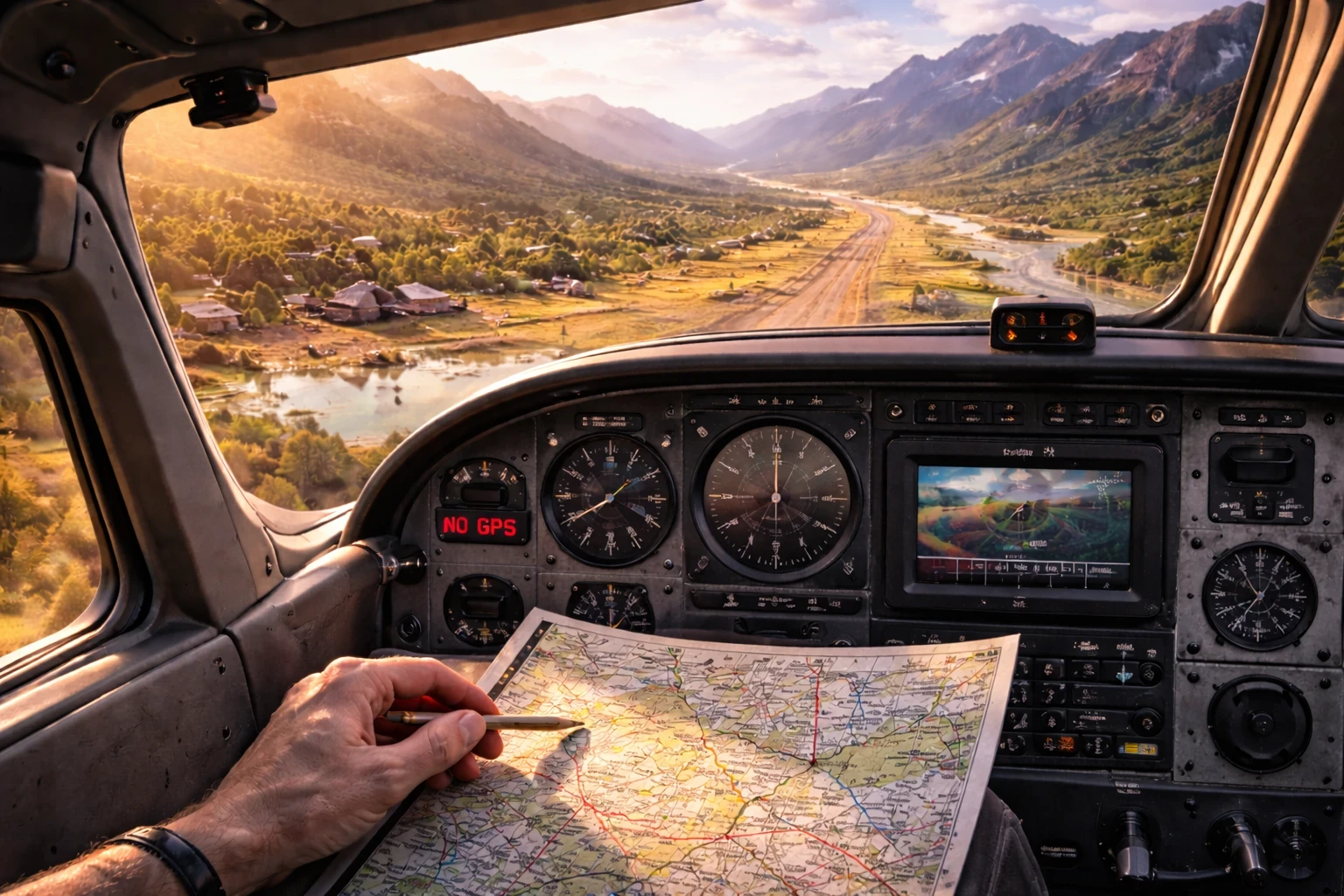
Flying through these underrepresented regions in your flight simulator often means going back to basics. While many modern pilots rely on GPS and advanced navigation systems, areas lacking this infrastructure encourage skills honed on traditional navigation techniques.
Dead reckoning is your trusty tool out here, relying heavily on your ability to calculate positions using speed, time, and direction. Without modern waypoints to guide you, it’s like going old-school, following the skies with pure wit and instincts where the next landmark isn’t a given.
For those more adventurous routes, Non-Directional Beacon (NDB) approaches are pretty common. They require a deeper understanding of radio navigation, pushing you to interpret simpler signals into meaningful guidance. Tutorials on conventional radio navigation in MSFS explain how these older tech systems work and how to build these skills.Mastering these approaches not only builds skill but also challenges your patience and persistence.
Without autopilot crutches, manual descent planning and maintaining proper terrain clearance become vital. Here, your virtual map and a keen eye are best friends, essential in navigating these hidden landscapes safely.
By intentionally disabling GPS assists, simmers can fully immerse themselves in the authenticity of flying as it used to be done. It’s not just a test of your technical know-how; it enriches your sim experience, making it feel less like a game and more like honest-to-goodness flying adventure.
✈️ Stepping Into the Skies Less Traveled
Exploring underrepresented regions in flight simulators isn’t just about flying somewhere new—it’s about challenging your skills, breaking old habits, and discovering how diverse and unpredictable the virtual world can be. From rugged terrain and minimal navigation infrastructure to extreme weather and traditional flying techniques, these regions offer the kind of raw, unfiltered flying experience you simply won’t find along the usual “tourist routes.”
If you’ve only flown in high-detail photogrammetry areas until now, this is your chance to step out of your comfort zone and see what your simulator can really do. Whether you’re sharpening manual navigation, testing weather strategies, or just looking for fresh scenery, the lesser-explored parts of the world are full of surprises.
👉 Ready for the next step?
Explore more routes, challenges, and immersive flying ideas in our growing library at Flight Sim Essentials— and turn every flight into a meaningful adventure.