
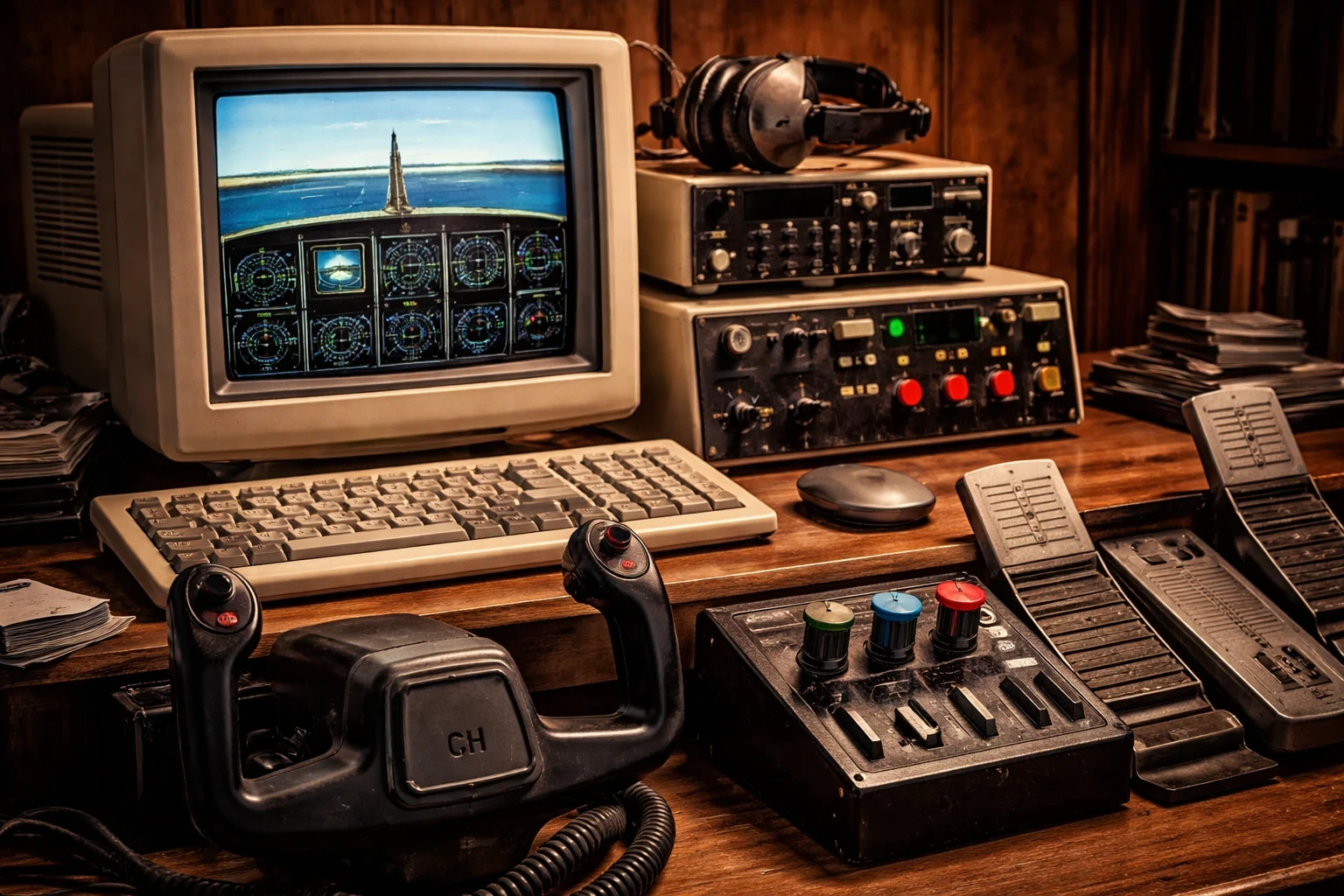
 Flight simulation hasn’t always looked the way it does today. Long before modern graphics and advanced hardware, early simulators relied on simpler equipment that still managed to capture the imagination of aviation enthusiasts. For many hobbyists, vintage gear brings back the excitement of those early days of digital aviation.
Vintage flight simulator equipment comes from a time when aviation technology in home computing was still developing. While nostalgia certainly plays a role, many enthusiasts also appreciate how these early devices helped shape the flight simulation hardware we use today.
Being into vintage flight equipment is a lot like being an aviation historian. You learn what worked, what didn’t, and why. Plus, there’s a certain charm in the tactile feeling of old-school controls and panels, each with a story etched in time. It’s the bridge connecting early aviation dreams with modern-day flight sim adventures.
Getting into vintage gear isn’t just for history buffs; it’s also a way to discover how far technology has come. Each piece helps tell the story of progress, showcasing design elements that have stood the test of time. Enthusiasts get hands-on with the gear, connecting with the ingenuity of engineers and pilots who were trailblazers in their day.
Decoding ‘Vintage’: What Qualifies as Vintage Flight Simulator Hardware
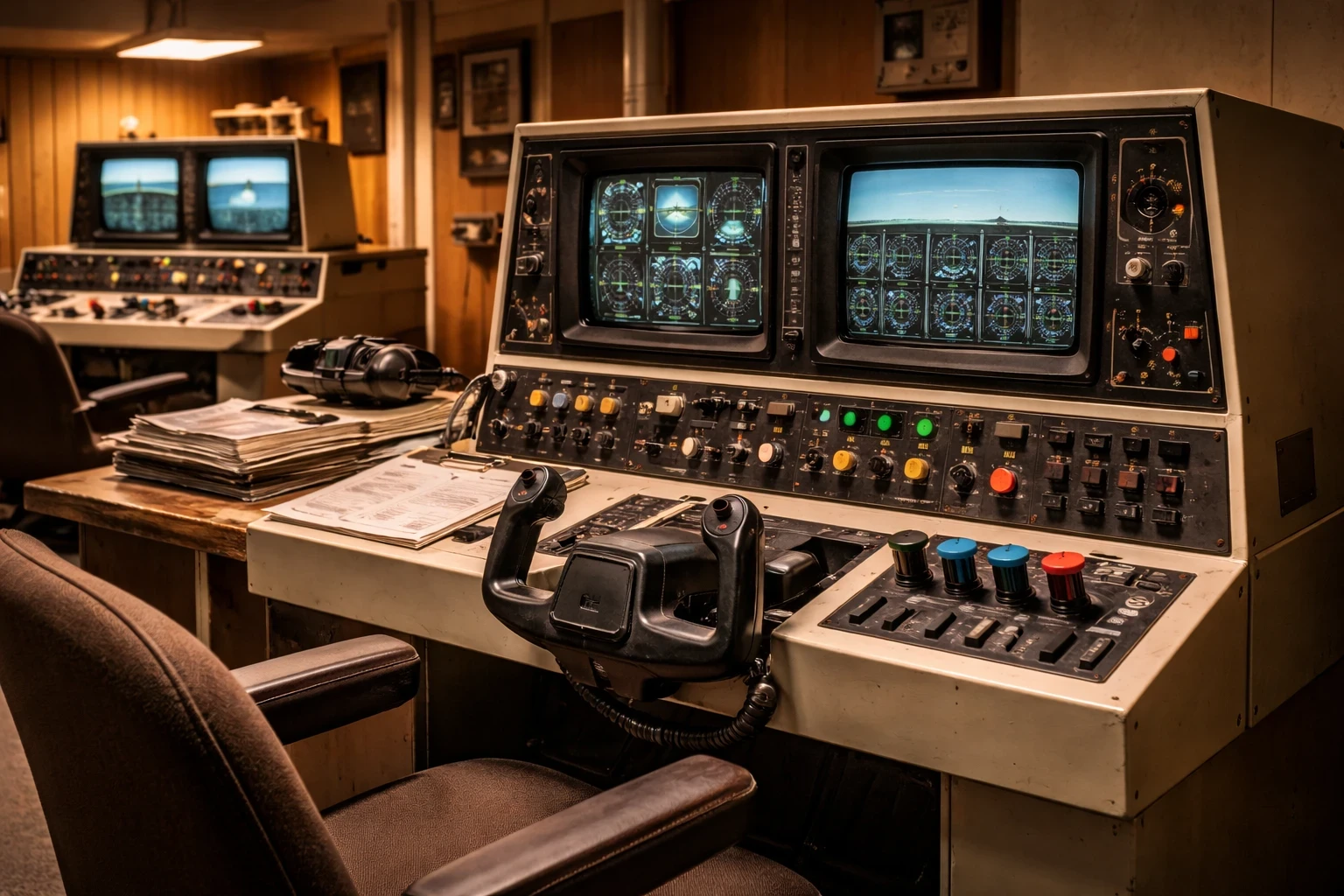
When it comes to vintage flight simulation hardware, understanding what makes something vintage is key. It’s not just about age; it’s about the era in which it was crafted and the tech evolution it represents. So, what truly qualifies as vintage?
Vintage flight simulator hardware usually dates from the late 1970s through the early 1990s, when personal computers were still evolving and flight simulation software was beginning to demand more specialized controls. Think of hardware that required a bit more elbow grease to get running than today’s plug-and-play standards. Back then, everything from joysticks to throttle quadrants often needed a little extra love just to function right.
The characteristics of vintage gear often include large, chunky switches, sturdy build quality, and, importantly, the use of gameport connectors before USB took over. Gear was meant to last and to feel like the real deal. These devices were designed before sleek minimalism ruled the day, giving them a sort of gritty charm that’s hard to resist.
What makes these pieces stand out isn’t just their age, but their role as trailblazers—the pioneers that paved the way for the refined technology enthusiasts enjoy now. It’s the heavyweight controllers, the iconic digital displays, the sounds of whirring hardware—each a testament to the journey of flight simulation.
If you’re thinking about diving into the world of vintage sim hardware, look for models that changed the game back then. Brands like CH Products and Thrustmaster were early innovators that are still revered in the sim community. Many of these early control concepts later influenced modern custom flight simulator controls and cockpit setups. All these elements together create a platform that enthusiasts are proud to call vintage.
Innovators of the Past: Classic Flight Simulator Software That Influenced Early Hardware
Back in the day, software wasn’t just catching up to hardware; it was pushing it to new limits. Some early flight simulation software set the stage for what we consider vintage gear now, driving innovation by demanding more from the machines of their time.
One of the biggest game-changers was Microsoft Flight Simulator 98. This software was pretty revolutionary, needing more advanced graphics and control options than ever before. It’s like the grandparent of today’s sophisticated sim platforms. The complexity meant hardware had to step up—introducing a need for more precise control inputs and better graphic rendering. You can explore the development history through the Microsoft Flight Simulator platform.
Falcon 4.0 is another classic that really pushed the envelope. Its in-depth flight dynamics and combat elements meant that control sticks and consoles had to be both responsive and durable. It drove the creation of custom throttle quadrants and enhanced joystick capabilities to keep virtual pilots fully in command.
Let’s not forget about early iterations of X-Plane, known for its realistic physics engine. Developers of this sim software didn’t pull any punches when it came to licensing top-notch technology. X-Plane demanded excellence from the hardware, propelling forward advancements that solidified its reputation among serious flight sim enthusiasts. More about the simulator can be found through the X-Plane developer resources.
These early software giants didn’t just challenge hardware designers—they inspired a whole ecosystem of flight simulation devices. It’s no exaggeration to say they laid the foundation for the expansive, realistic experiences we cherish today. The result was a collaborative evolution between software demands and hardware capabilities that fuels the innovation we see in modern flight simulation.
Groundbreaking Controls: Early Joysticks and Flight Control Devices
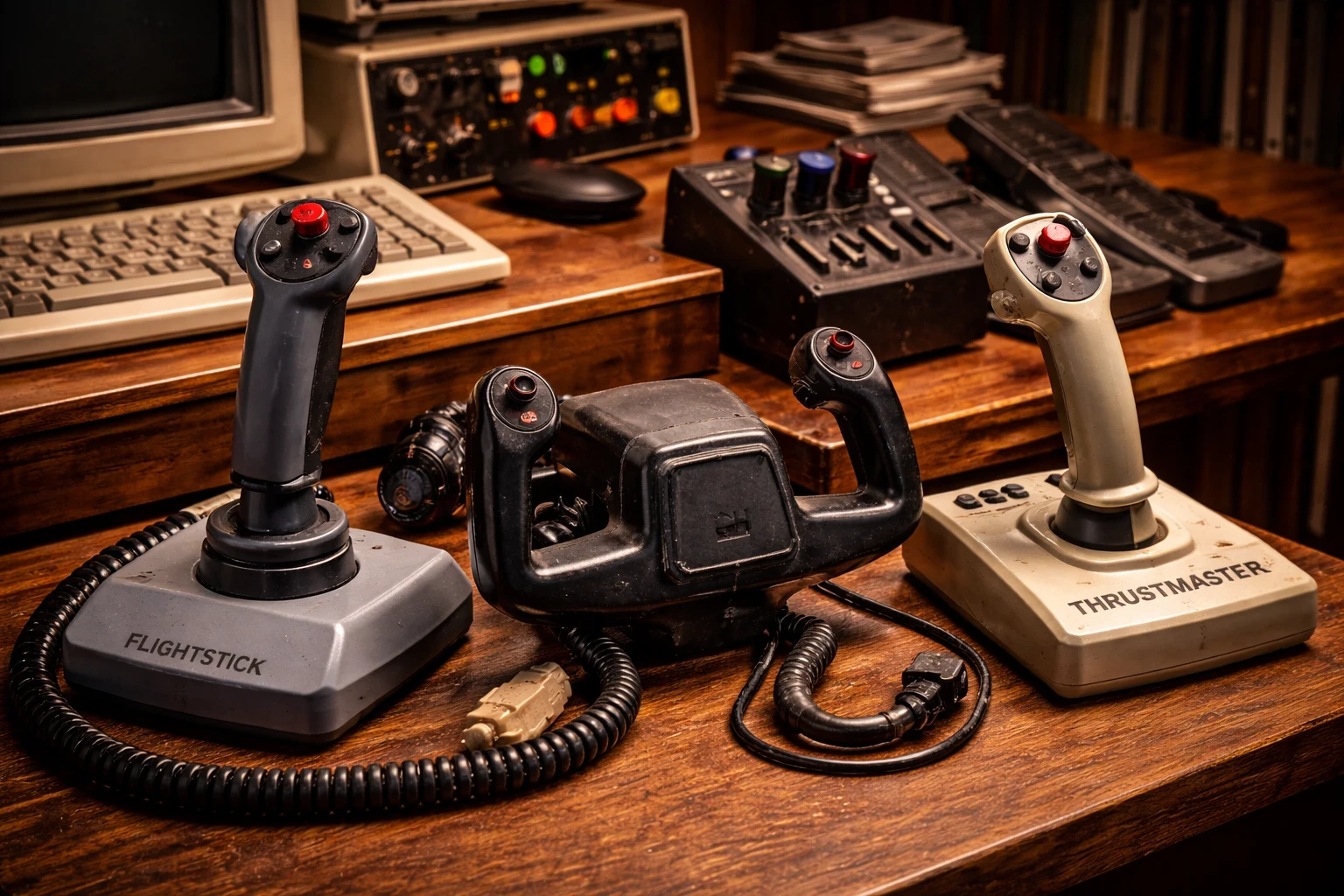
Many of the control systems used in modern simulators can trace their origins back to early joysticks and flight control devices developed during the early years of home computing. Early flight sim equipment introduced a whole new dimension to home computing, turning flight enthusiasts into virtual pilots with the twist of a handle and the press of a button.
Some of the original joystick models were built to resemble real aircraft controls, giving users a sense of flying a plane right from their living room. Consider models from the likes of CH Products and Thrustmaster, companies that set the bar high by offering robust controls made for durability and precision.
Let’s talk about flight yokes—devices designed to mimic the control wheel used in actual aircraft. These early versions captured the feel of flying in ways other controllers couldn’t. The ability to control pitch and roll so accurately back then was a real eye-opener, enhancing the realism of home flight simulations.
Rudder pedals, another essential piece of the puzzle, added layers of authenticity to the simulation experience. These early iterations provided that needed touch of realism, simulating the pedal control used for yaw movement in aircraft. Pilots-in-training and hobbyists alike could better hone their skills, understanding the impact of each input on their flight path.
Back in those days, it was about more than just playing a game—it was about mastery and understanding the intricate dance between pilot and plane. These pioneering devices paved the way for enhanced interaction and control, setting a foundation that modern tech would build upon and refine, creating the sophisticated gear we use today.
The Backbone of Retro Simulators: The Gameport Era Before USB
Before USB became the standard connection for most computer peripherals, flight simulator hardware relied heavily on gameport connections. These connections were the unsung heroes of early flight simulation, bridging the gap between the virtual cockpit and the real world.
Gameports typically featured a 15-pin connector that was a standard on many sound cards of the time. They might seem clunky by today’s streamlined standards, but they got the job done for players eager to start soaring through digital skies. It was a connection that demanded patience, rewarding those who mastered its quirks with seamless control.
There were challenges, though. Gameport connections often meant manually configuring settings and sometimes dealing with compatibility issues, which could make the novice’s head spin. Yet, this hands-on troubleshooting is exactly what excited tech-savvy pilots—the satisfaction of conquering technological obstacles.
These connectors allowed multiple inputs and were essential during the dawn of multi-axis control setups. When flight sims became more demanding, requiring separate throttle controls, rudder pedals, and other input devices, gameports adapted until USB took over, pushing gameports into obscurity.
For those holding onto their vintage hardware now, there’s a kind of magic in maintaining and using these old connections. The legacy of gameport technology lives on as a reminder of the DIY spirit that still fuels the flight sim hobbyist community to this day, especially among builders experimenting with DIY flight simulator accessories and custom control panels.
Evolution’s Blueprint: How Vintage Equipment Shaped Modern Flight Simulation Hardware
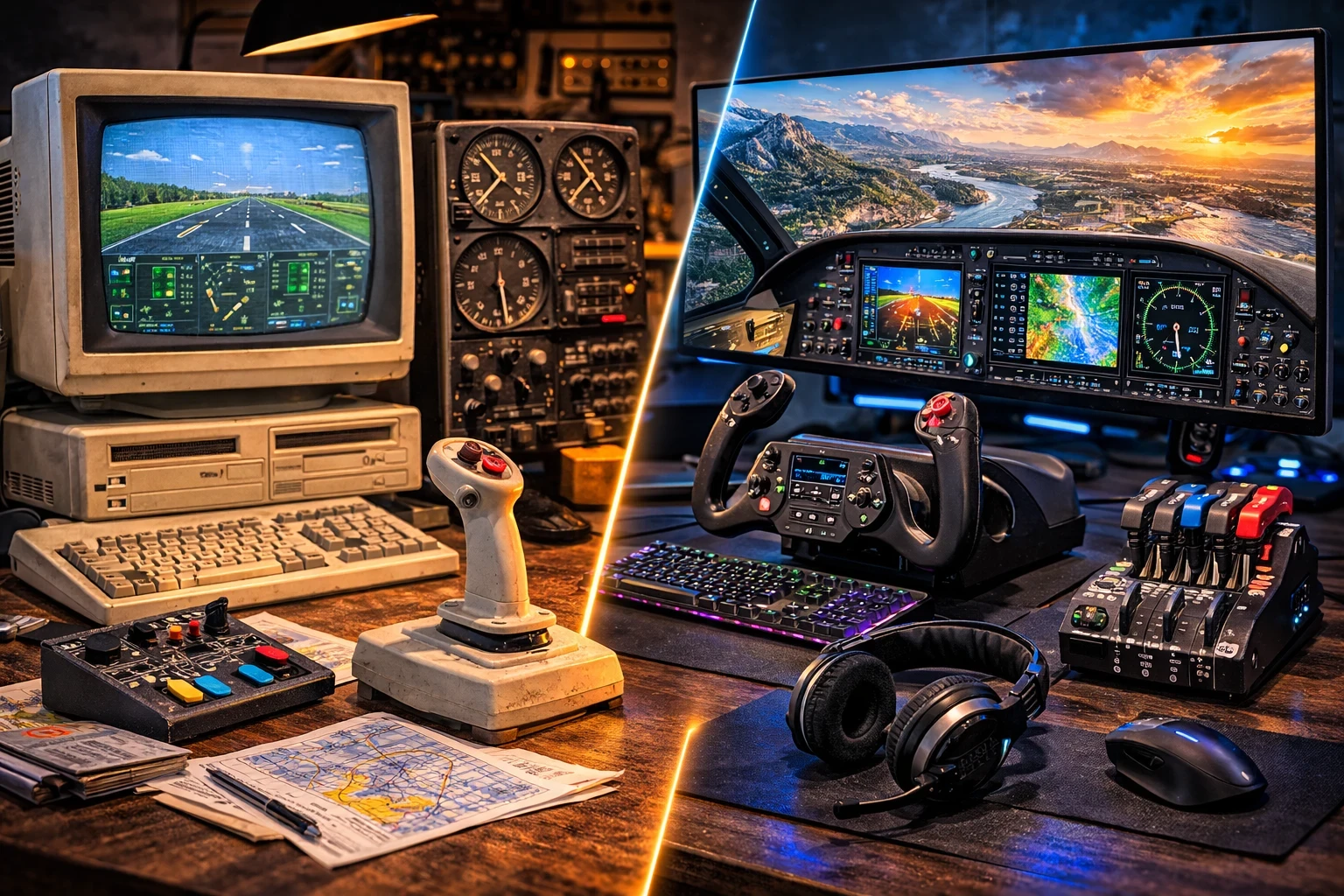
Looking back at vintage flight simulation equipment also helps explain how modern hardware evolved. Vintage flight simulation gear wasn’t just about helping pilots-to-be feel like they’re in the cockpit—it’s about laying the groundwork for future innovation. The design principles and functionality of vintage gear have had a lasting impact, serving as the blueprint for today’s advanced technology.
Early flight sim hardware, with its chunkiness and tactile feedback, taught us that sims need to feel realistic to be effective. This philosophy has been carried into modern equipment: today’s yokes and throttle systems are high-tech marvels that owe their existence to these earlier pioneers. They’ve taken the feel and functionality of old designs and refined them into the precise tools used in home simulators around the world.
Vintage hardware showed how essential customization and complexity could be. This has opened the door for current hardware to support expandable setups, letting users mimic everything from single-engine props to high-tech jets. The modularity of classic flight panels, autopilot instruments, and throttle quadrants set a standard for today’s adaptive and versatile configurations.
Modern developers might have shiny new tech, but the spirit of innovation that spurred early engineers is alive and well. Every button pressed, every dial turned on a modern flight sim setup, has threads tracing back to those early, simpler days. While technology continues to evolve, the passion and dedication behind it remain unchanged.
Appreciating the Legacy of Flight Simulation Hardware
Vintage flight simulator equipment represents more than just outdated technology—it tells the story of how modern flight simulation came to be. From early joysticks and flight yokes to the gameport connections that once powered entire simulator setups, these pioneering devices helped shape the immersive simulation experiences we enjoy today.
For many enthusiasts, exploring vintage hardware is a way to understand the roots of the hobby while appreciating the remarkable progress that has taken place over the decades. The design ideas and engineering concepts behind these early systems continue to influence modern simulator controls, cockpit panels, and home flight setups.
If you’re interested in building or improving your own simulator environment, take some time to explore more guides and resources on Flight Sim Essentials. Whether you’re learning about hardware upgrades, custom cockpit controls, or creative DIY projects, there are plenty of ways to keep expanding your flight simulation experience and take your virtual aviation journey even further.