

Classic aviation adventures take you back to a time when things weren’t as automated as they are today. Think of the era before GPS, when pilots had to rely on their skills and senses to navigate the skies. It was a time defined by limited instrumentation, meaning pilots had to work with minimal equipment, making every flight an adventure filled with challenges and excitement. You can see how classic routes shaped aviation history in posts about emulating historical flights in flight simulators on Flight Sim Essentials.
Imagine being in the cockpit with just a compass and a basic map. No digital screens showing you the way, just your knowledge of the skies and the terrain below. The historical context of these adventures reveals how aviation pioneers pushed the boundaries of what’s possible, facing navigation constraints that made even a simple cross-country flight a daunting task. One way to deepen this experience is by flying classic add-on routes from community collections that pay tribute to vintage aviation scenarios.
Navigating through these limitations involved a lot of manual calculations and a good understanding of the elements. Pilots back then couldn’t rely on advanced tech to guide them, which is vastly different from today’s reliance on digital aids. This period forced aviators to have a deep understanding of their aircraft and environment, and that’s what makes recreating these adventures in simulators so thrilling. If you want to sharpen your navigation fundamentals, you can practice VOR and NDB skills using the Precision Navigation: Mastering VOR and NDB guide on Flight Sim Essentials.
To recreate these classic flights in a simulator, you have to strip things down. Turn off the GPS, hide the digital map, and fly with the bare essentials. This isn’t just about “going old-school” — it’s about feeling the pressure and satisfaction of navigating the sky the way early pilots actually did.
Mastering Era-Specific Navigation Techniques

In the days before high-tech navigation, pilots relied on a series of skills to get from point A to B. Dead reckoning was a fundamental technique, requiring pilots to chart a course using speed, time, direction, and distance. This method depends heavily on constant calculations and adjustments. While it might seem daunting at first, practicing this in a flight simulator can make it second nature. For background on how basic navigation principles are structured, see historical navigation descriptions like those in the Flight Simulator Navigation PDF guide.
Celestial navigation is another piece of old-school flying that’s surprisingly fun to recreate. Some sims even have mods that give you realistic night skies, letting you navigate by stars just like early long-distance pilots. It’s not something we use today, but adding it to your flights brings a new level of immersion and situational awareness. Visible stars and celestial reference points were used in early long-distance flights, such as the first nonstop transatlantic crossing by Alcock and Brown in 1919.
The use of Non-Directional Beacons (NDB) was commonplace back then. These beacons, unlike modern VOR systems, provide a simple radio signal for navigation. Try flying with only one NDB and a basic receiver in your simulator to understand how early aviators plotted their courses. This practice can sharpen your bearing-reading skills and condition you to handle navigation with minimalistic tools.
Early radio limitations added another layer of complexity. Without the comfort of constant communication and guidance like today, pilots often had to make decisions independently and sometimes without direct contact with ground stations. Simulating these constraints involves disabling modern radio communications and developing scenarios where your judgment takes the lead.
Integrating these classic navigation techniques into your simulator setup is not just about returning to basics; it’s an excellent way to refine problem-solving skills and decision-making under pressure. By embracing the challenges faced by early aviators, you’ll gain a new appreciation for today’s technology and perhaps even find joy in the raw skill it took to navigate the skies.
Navigating Aircraft Technology Limitations
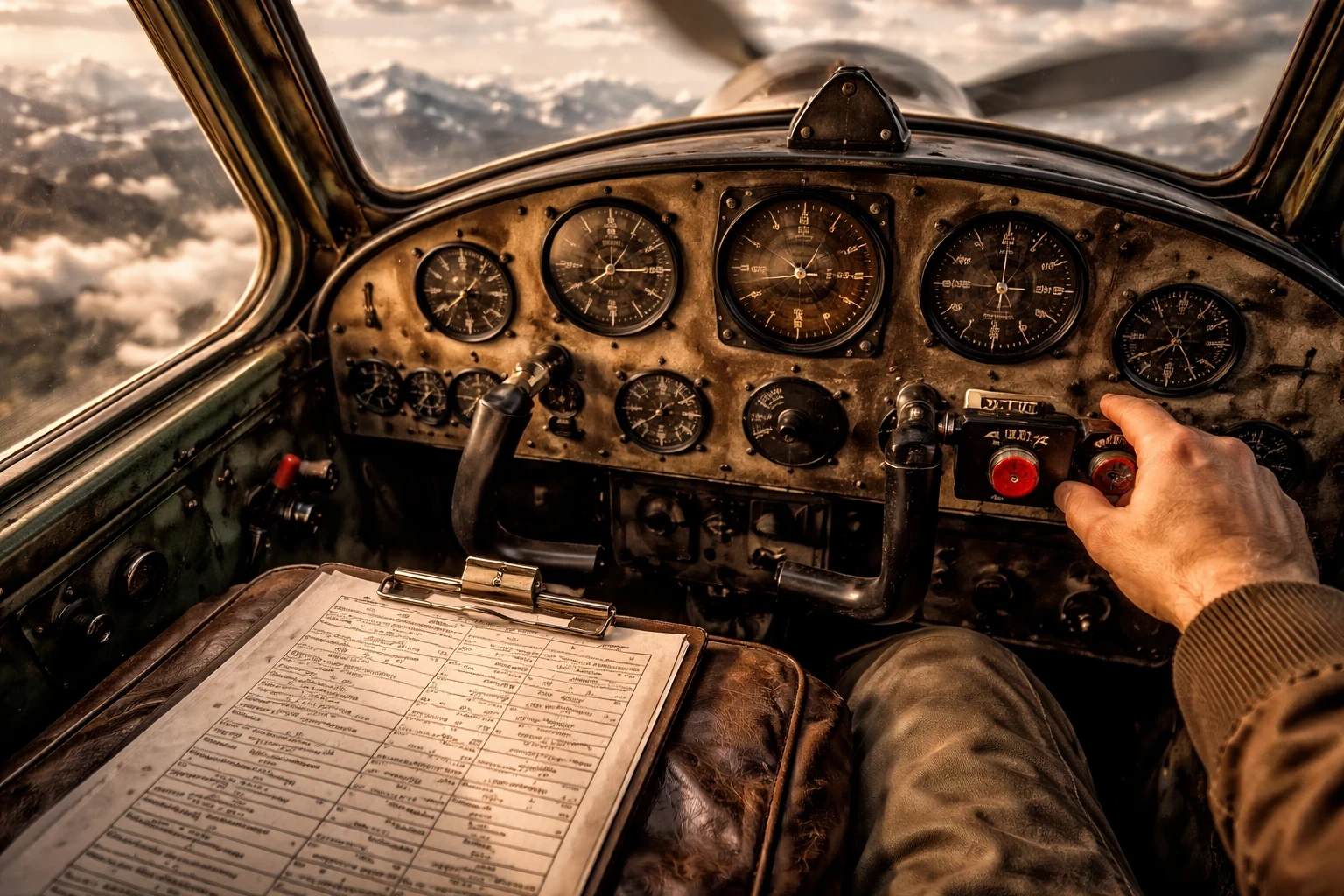
Flying in the golden age of aviation wasn’t just about getting from one place to another. Pilots had to understand their aircraft’s limitations and adapt to them on the fly. Engine reliability, for instance, was a significant concern. Unlike today’s highly dependable engines, early models often required constant monitoring and management to prevent mid-air issues. Practicing this in a simulator builds your ability to anticipate and react to engine problems, a valuable skill even in today’s tech-driven cockpit.
Manual mixture control was another challenge pilots faced regularly. Adjusting the fuel-air mixture was crucial for optimal engine performance and fuel efficiency. In simulators, engaging with this process will give you an insight into engine management and teach you how to fine-tune performance based on altitude and air density.
Early autopilots were basic — if the aircraft even had one. Pilots spent most of the flight manually holding course and altitude. Turn off autopilot in your sim and you’ll instantly feel the workload they dealt with. It’s a great way to train focus, precision, and the mental stamina needed for longer flights.
The instrumentation panels were basic, often limited to the essential altimeter, airspeed indicator, and attitude indicator. Flying with these basic instruments—common in many of the older aircraft add-ons available in simulators today—forces you to concentrate on the fundamentals of flight. For tips on flying manually with minimal instruments and honing basic flying skills, see our gear and guide collections on Flight Sim Essentials. You’ll learn how to interpret minimal data and develop keener situational awareness.
Engaging with these technology limitations isn’t just about nostalgia. It’s about building a robust understanding of aircraft systems and refining skills that even modern technology hasn’t entirely replaced. As you push yourself to thrive under these constraints, you’ll find your piloting skills and confidence growing, preparing you for any situation.
Conquering Fuel Planning & Endurance Challenges
Flying without modern conveniences means you’ve got to master fuel planning like pilots did back in the day. Without VNAV or automated systems, every drop of fuel counts, and every decision impacts the success of your flight. Calculating your fuel manually forces you to understand consumption rates and efficiency, adding another layer of realism to your simulated adventures.
Step climbs, another aspect of fuel management from the past, help maximize efficiency over long distances. They involve climbing in stages to optimize fuel use and performance based on weight and weather conditions. By incorporating step climbs into your simulator flights, you naturally develop better energy management skills.
Without automated systems to back you up, conservative cruise planning is yet another challenge. This involves making careful decisions based on in-flight conditions, often requiring adjustments and compromises to ensure you reach your destination with adequate reserves. Practicing this teaches critical thinking in resource management and boosts your confidence in extended flight scenarios.
These fuel management practices are more than just technical exercises; they’re about honing your judgment and foresight. Learning to gauge fuel needs without assistance builds a deeper understanding of flight dynamics and prepares you to handle unexpected situations effectively.
Mastering these skills turns potential obstacles into a rewarding educational experience. You discover the intricacies of flight planning, becoming proficient in manual calculations and strategic thinking, both in simulators and real life. It’s a reminder that even minimal resources can pave the way for exploration, perseverance, and success.
Simulating Weather Uncertainty and Historical Routes

Weather forecasting in aviation’s early days lacked today’s precision. Pilots often faced incomplete forecasts, adding a layer of unpredictability to any journey. In simulators, you can replicate this experience by adjusting settings to limit weather updates and relying on your judgment to navigate through changing conditions — a technique discussed in Flight Sim Essentials’ Exploring The World’s Iconic Aviation Routes where weather and geography shape flight difficulty.
Flying without radar means you must prepare for icing conditions and other weather challenges with heightened awareness. Simulating these conditions demands constant vigilance and quick decision-making, skills that are crucial when flying in unpredictable environments. You’ll learn how to adapt your flight plan as weather conditions evolve, reinforcing your ability to think on your feet.
Diversion planning becomes a vital skill when weather is uncertain. In simulators, make it a habit to identify alternate airports along your route. This practice not only enhances your situational awareness but also ensures you’re ready to tackle unexpected detours with confidence.
Building historical route scenarios is where the sim really comes alive. Use old maps, recreate early transatlantic paths, and compare what airports looked like then versus now. It’s a simple way to turn a normal sim session into an immersive trip through aviation history.
Simulating weather uncertainties and retracing historical routes push you to refine your skills and deepen your understanding of aviation history. Embracing the unknown, making strategic diversions, and mastering historical navigation foster a richer and more rewarding simulation experience. It’s about experiencing the thrill of discovery and the satisfaction of conquering challenges on your own terms.
✈️ Rediscovering the Spirit of Early Flight
Recreating classic aviation adventures in a simulator isn’t just a fun challenge — it reconnects you with the roots of real-world flying. When you shut off the GPS, rely on a compass, manage engines manually, and navigate storms with nothing but instinct and basic instruments, you experience aviation the way early pilots actually lived it.
These old-school techniques sharpen modern flying skills too. You learn to read your aircraft more intuitively, make confident decisions without relying on automation, and appreciate the craftsmanship and courage that built aviation as we know it today.
If you’re ready to push your skills and bring more meaning into your simulator sessions, classic flying is one of the most rewarding paths you can explore.
🚀 Ready for Your Next Flight Sim Challenge?
Here’s what you can do next:
✔ Explore more immersive tutorials like Emulating Historical Flights With Flight Simulators
✔ Try a new classic-route scenario or recreate a famous early flight
✔ Practice dead reckoning, NDB tracking, or manual engine management on your next sim session
✔ Share your recreated classic flight on your social channels or community forums
Whether you’re flying for skill-building or pure nostalgia, the skies of aviation’s past are wide open — and your simulator is the perfect place to bring them back to life.