
Last updated on February 24th, 2026 at 02:25 pm
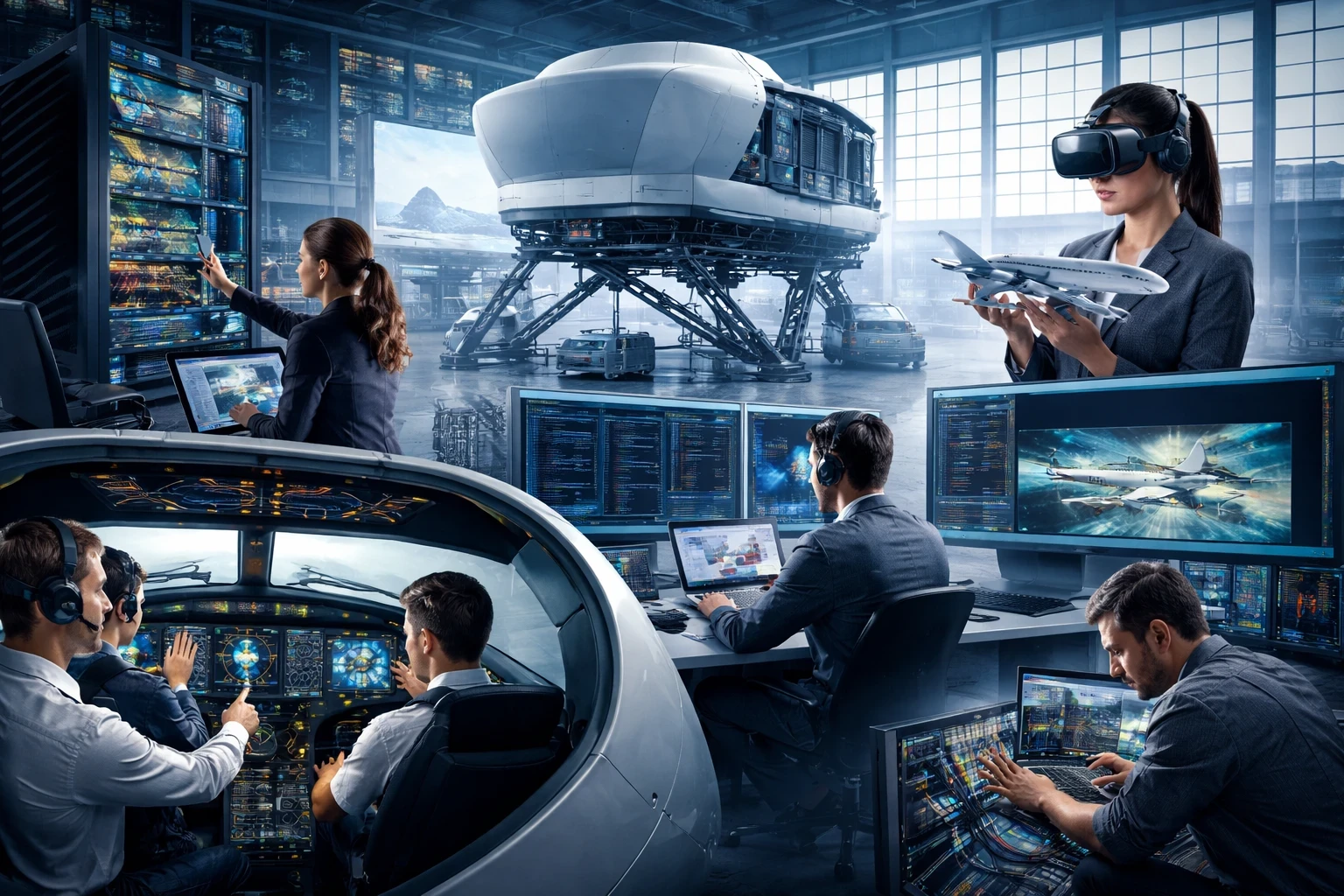
The simulation industry is buzzing with opportunities for folks looking to combine a love for aviation with cutting-edge tech. In this ever-evolving field, you’ll find roles that suit tech enthusiasts, educational designers, artists, and even those with a knack for organization, all driving forward the ways pilots are trained today. ➡️ For a breakdown of how simulators are used in training today, see our article on How Flight Schools Benefit from Simulation Technology.
One of the coolest things about this industry is how vital simulator technology has become for modern aviation training. Whether you’re sitting in a pilot’s seat (virtually, of course) or working behind the scenes to make that experience fly smoothly, these roles are critical in shaping safe and skilled pilots the world over. As outlined by the FAA’s Advisory Circular AC 61‑136B, certified training devices are increasingly recognized within formal pilot training pathways: FAA Advisory Circular AC 61‑136B PDF.
There’s never been a better time to jump into the sim industry. Whether you’re fine-tuning code, calibrating motion platforms, or designing hyper-realistic cockpit interiors, your work directly impacts how pilots train today. This is where aviation meets innovation—and there’s room for anyone ready to make flight training smarter, safer, and more immersive. ➡️ Explore more on simulator setups in our piece on Best Joysticks for Flight Simulation.
Not only does this field offer a chance to work with advanced technologies and creative solutions, but it also opens doors to rewarding pathways. Building a career here means continually growing and adapting, learning new skills, and contributing to something greater—safety and excellence in aviation. Based on FAA training principles, simulation complements traditional education and supports skill development across many phases of pilot instruction: FAA Aviation Instructor’s Handbook.
So whether you’re a seasoned pro in another tech field or just starting out, exploring opportunities within the sim industry could be your ticket to a fulfilling career. Keep your eyes on the skies and see where a role here could take you!
Guiding the Sim Experience: Simulator Instructor Roles
Working as a simulator instructor offers a rewarding blend of teaching and aviation. You’re not just imparting knowledge; you’re shaping the pilots of tomorrow. What makes this role truly engaging is the hands-on interaction with pilot candidates, walking them through complex instrument procedures, guiding them in emergency scenarios, and ensuring their checklist workflows are second nature.
Key skills every simulator instructor should hone include a solid grasp of various aircraft systems and operation protocols. You become a mentor, guiding students as they navigate the intricacies of flight through FAA and EASA-approved simulators. The attention to detail and ability to adapt your teaching method to different learning paces are crucial here.
Being FAA/EASA-certified is essential. These certifications affirm your skills and knowledge, ensuring you’re equipped to deliver top-notch training. If you’re passionate about aviation and education, securing these certifications can catapult your career. Invest time in getting these qualifications, as they open doors to more advanced roles and responsibilities.
Being FAA/EASA‑certified is essential. These certifications affirm your skills and knowledge, ensuring you’re equipped to deliver top‑notch training. As outlined on the FAA Aviation Handbooks & Manuals page listing the Instructor’s Handbook, this resource is a key reference for mastering instructional techniques.
The beauty of this role lies in its variety. Every day can bring different scenarios and challenges, keeping the job dynamic and engaging. Moreover, you’ll stay on the cutting edge of aviation advancements as simulators evolve, ensuring pilot candidates receive the best possible training. For anyone who thrives on adaptability and innovation, this job can be incredibly fulfilling.
Whether you’re coming from a background in flying or teaching, transitioning into a simulator instructor role might just be a way to keep your love for aviation alive and kicking. It’s a rewarding path that offers both personal and professional growth.
Behind the Scenes: Flight Simulator Technician’s Pivotal Role

Being a flight simulator technician means holding the reins behind the technology that keeps aircraft training simulators in top shape. It’s a role that calls for a mix of technical skills, problem-solving, and a knack for detail, ensuring these high-tech machines run without a hitch. ➡️ See how technicians support sim systems in our article on Essential Flight Sim Hardware Components.
Day-to-day, technicians find themselves knee-deep in hardware diagnostics, dealing with software updates, and ensuring motion platforms are as smooth as they should be. The gig isn’t just about fixing things when they break; it’s about preemptively maintaining them to keep the simulators FAA and EASA compliant. Knowing your way around both hardware and software intricacies is key to thriving here.
There’s something immensely satisfying about solving complex issues or preventing them from cropping up in the first place. Here, techno-geeks get their fill while working on updating systems and tackling troubleshooting head-on. Each day can present new challenges and opportunities to learn.
For anyone diving into this field, it’s crucial to have a robust understanding of both the software and hardware sides. While formal education helps, hands-on experience with various simulator models and platforms is gold. Get skilled in areas like motion systems, graphics, and hydraulics, and your expertise will be in high demand.
The career paths within the world of simulation technology are diverse. Starting as a technician can lead you into more specialized areas or towards managerial roles within simulator facilities. It’s an industry offering not only the excitement of tech but also the satisfaction of knowing you’re playing a vital role in training safe and competent pilots.
Crafting Realistic Simulations: Inside the Mind of a Developer
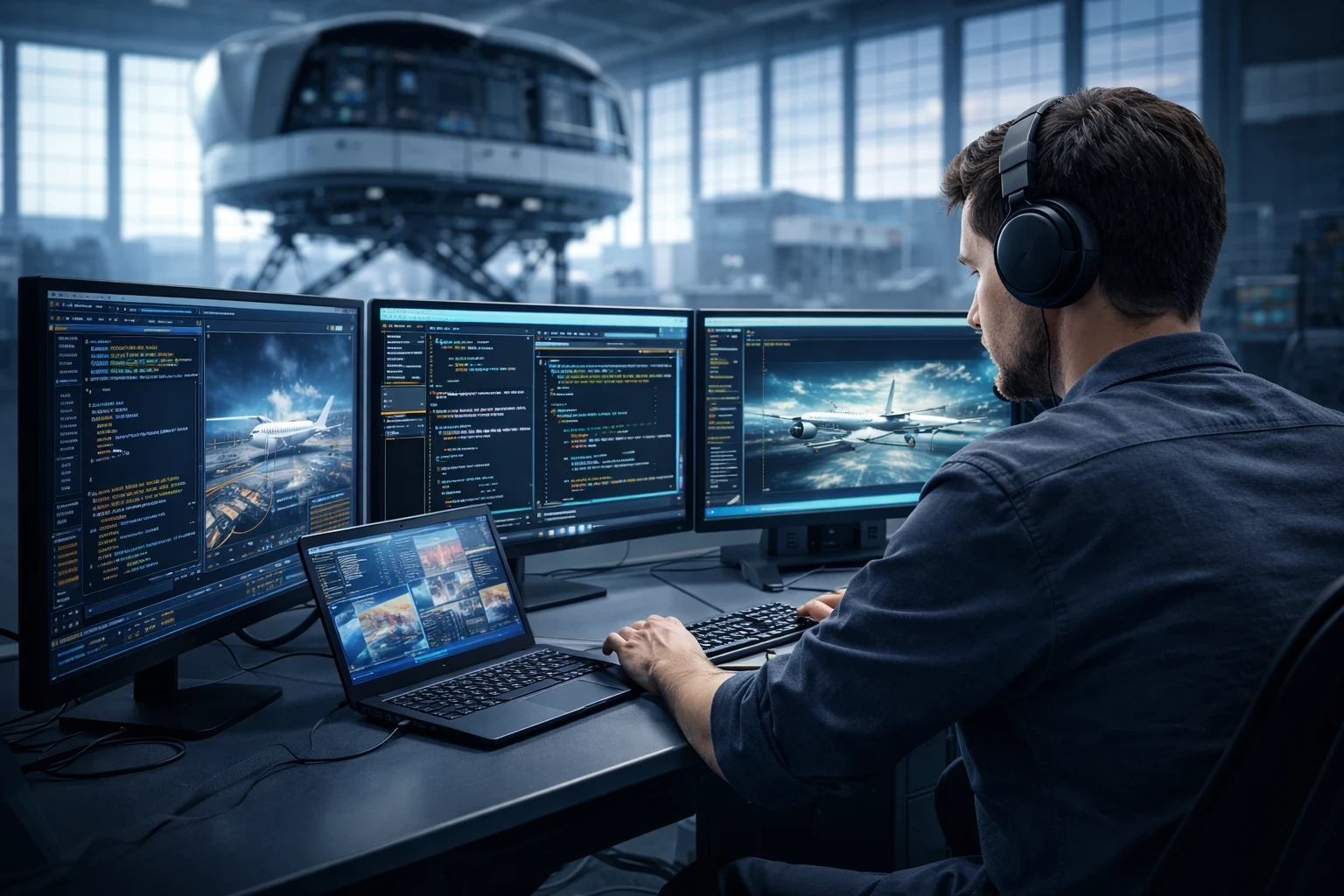
Developing simulations demands a unique blend of creativity and technical chops. As a simulation software developer, you’d be the brain behind the systems that make virtual flight realistic. From aircraft physics to weather engines and ATC modules, these are your playgrounds.
Your coding toolkit—C++, C#, Python—isn’t just for functionality. It’s how you build flight dynamics that feel real, weather systems that challenge, and ATC interactions that train pilots to think on their feet – features commonly used in advanced simulator software that integrate weather generation and ATC communications for realistic pilot training (see pilot simulator software components).This isn’t about writing lines of code; it’s about crafting virtual skies that fly like the real thing.
Collaborating with airlines, flight schools, or military training programs is part of the gig too. These partnerships can open up diverse projects and learning experiences. You’re not just coding in isolation; you’re part of a team building something that has real-world impact.
There’s a real sense of accomplishment when you see your code come to life in a simulator, improving training for pilots around the world. This role offers the satisfaction of knowing you’re enhancing the realism and effectiveness of aviation training tools.
Getting into this field often requires a solid background in computer science or a similar technical discipline. This industry moves fast—so should you. Real-world projects, indie sim mods, or community dev teams give you hands-on traction. Stay curious, stay sharp, and don’t wait for tech to slow down. It won’t.
Designing Immersive Simulations: Roles for Artists and Creators
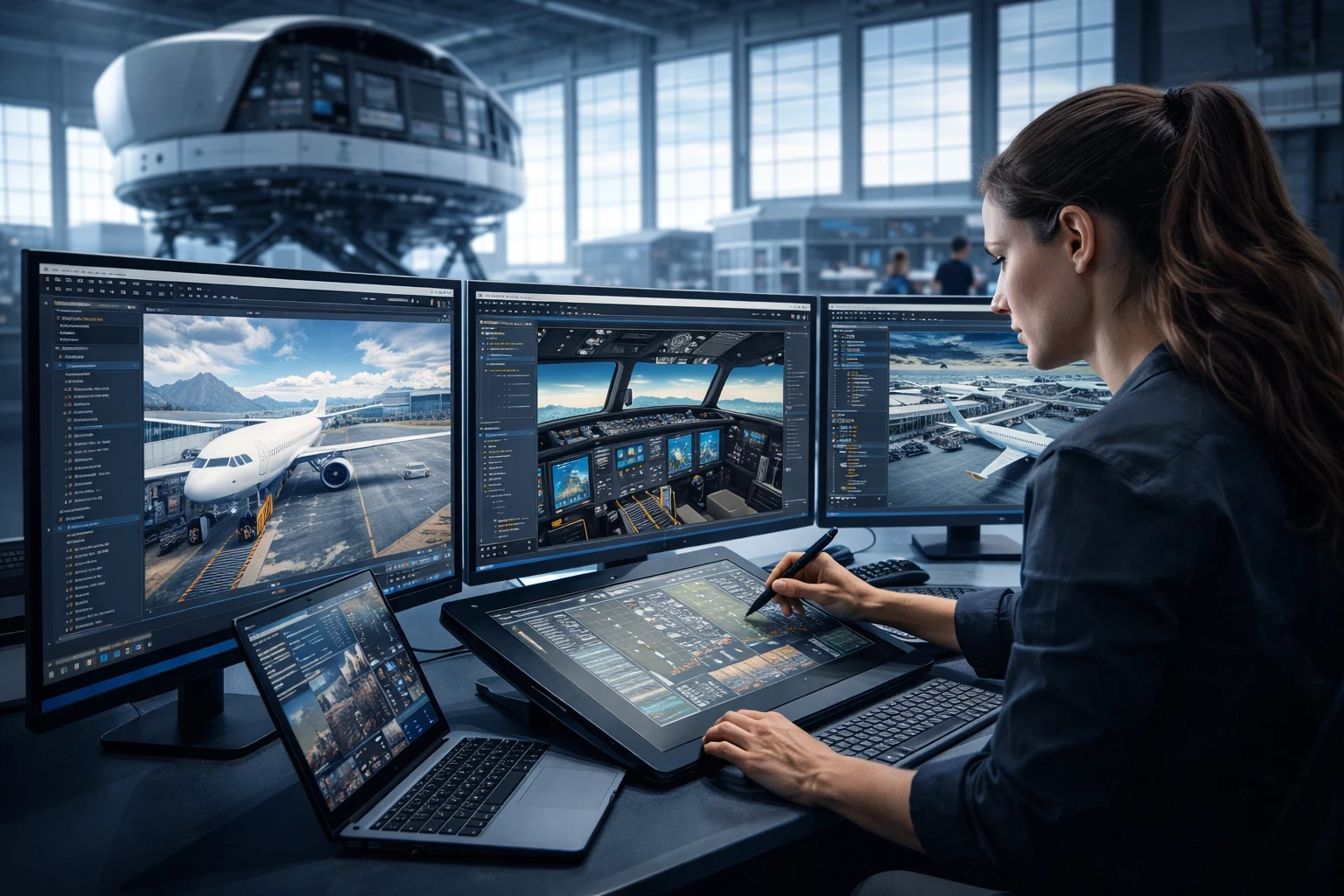
In the realm of simulation, artistic vision meets technical precision. As a 3D environment artist or modeler, you’re tasked with crafting the breathtaking visuals of airports, cockpits, and aircraft models. It’s about bringing realism to the virtual world, creating spaces where both experienced pilots and trainees can practice with authenticity.
Familiarity with software like Blender, Maya, or Substance is key. Mastery of these tools allows you to fashion immersive environments that not only look great but enhance the training experience. The detail in environment creation can make or break realism, so an eye for detail is absolutely crucial.
Many artists work freelance, enjoying the variety of projects that come with collaborating with different sim developers and teams. This flexibility can be rewarding if you enjoy setting your own schedule and choosing projects that fascinate you. Alternatively, some opt for steady roles in larger simulation development companies, which offer structure and a team-centered approach.
This role is where technical chops meet artistic flair. You’re not just building eye candy—you’re designing environments pilots will remember. From the cockpit texture of a 737 to the flicker of runway lights in low visibility, your visuals shape how trainees engage with the sim. It’s creative work with real-world impact.
Breaking into the industry typically involves developing a robust portfolio showcasing your best work. Engage in community forums, collaborate on projects, or contribute to indie games that mimic sim environments to get your foot in the door. The key is to combine your love for aviation, art, and tech into a cohesive skill set that makes you a sought-after creator.
🧭 Charting Your Path in the Sim Industry
Flight simulation isn’t just a passion project—it’s a professional gateway. Whether you’re drawn to the technical side, the creative process, or the instructional impact, the sim industry offers more than just a job. It’s a growing ecosystem where your skills can help shape the next generation of safe, skilled pilots.
🛠️ Ready to take the next step?
Explore our in-depth guides, hardware breakdowns, and simulator training insights to start building your career from the ground up. 👉 Browse career-building content at Flight Sim Essentials.