
Last updated on March 16th, 2026 at 11:49 am
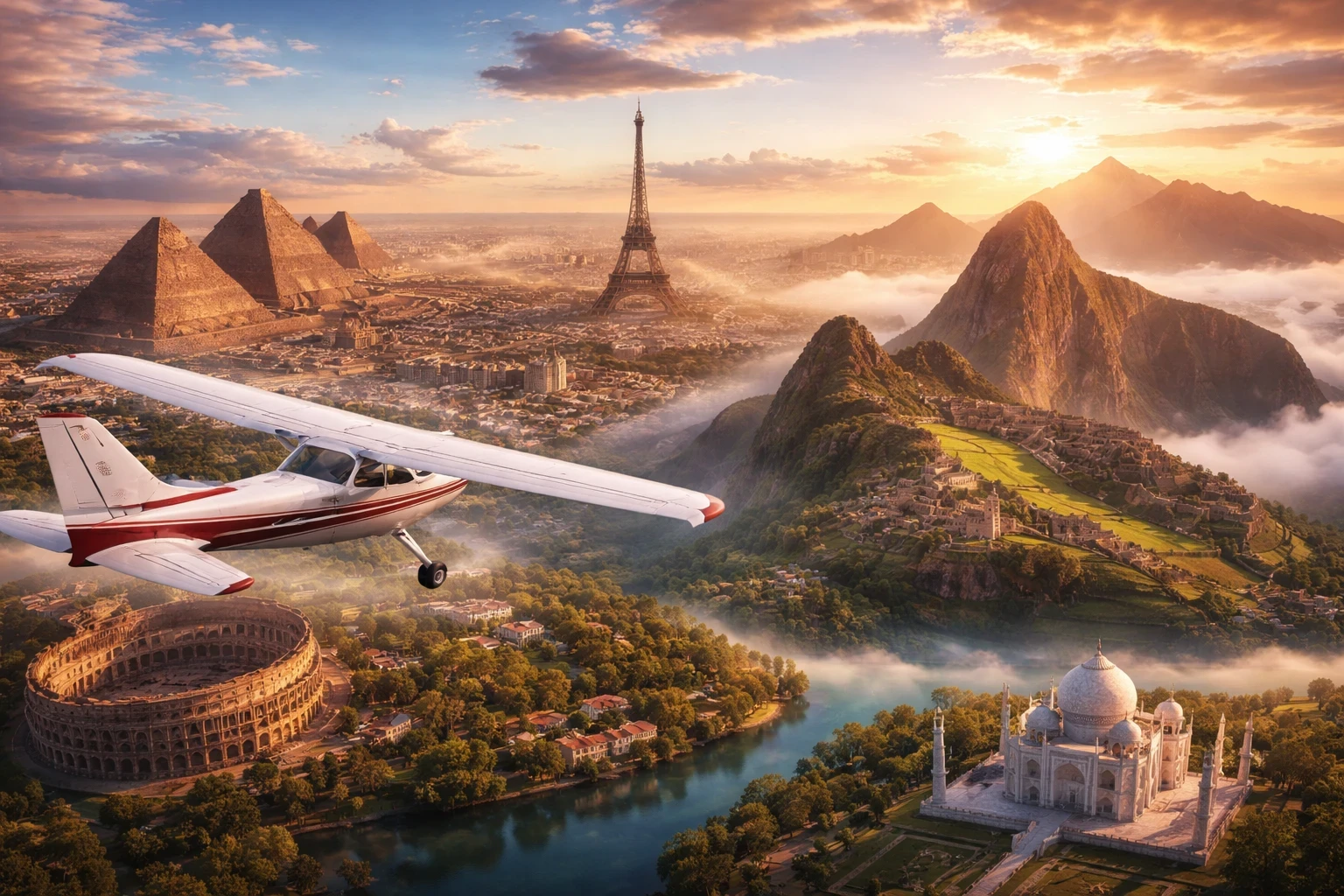
Modern flight simulators are a completely different experience compared to what many of us remember. If you enjoy flying over world wonders from above, today’s flight simulators feel far more grounded in reality. With massive amounts of real-world data behind them, the scenery has moved well beyond blurry textures into something that actually feels believable and immersive.
What makes this level of realism possible is the sheer volume of real-world data used behind the scenes. This data allows simulators to recreate famous landmarks with a level of detail that genuinely reflects their real-world shape, scale, and surroundings. Imagine soaring above the Pyramids or gliding by the Eiffel Tower. It’s all thanks to precision data that mirrors every nook and cranny.
When I move into Microsoft Flight Simulator 2020 or Microsoft Flight Simulator 2024, I plan to spend more time flying to interesting locations purely for exploration. That’s something I’ve always enjoyed in flight simulation. Even when I was using Microsoft Flight Simulator X, I preferred flying smaller aircraft low over cities just to experience the scenery from above.
Photogrammetry and satellite imagery play the starring roles here. They take all that raw data and turn it into something that looks—and often feels—real. When you see how these landmarks pop out, it’s almost like you’re on a real flight, soaking up every detail from the sky.
What truly ties everything together is how that realism affects the overall experience. It’s not just about visual accuracy—it’s about how flying over these landmarks actually feels during a flight. When done right, each location becomes more than scenery; it becomes a destination you deliberately plan for. Every flight becomes a journey, every landmark a destination. It’s immersive and, for people like us, utterly captivating.
Navigating the Skies: Altitude, Speed, and Flight Path Techniques

Elevation isn’t just a number when you’re flying over something like the Grand Canyon or Skara Brae. The right altitude is key to capturing those impeccable views that simulators offer. This isn’t just about flying high; sometimes, cruising lower gives you that sweet, up-close look at the details you’d miss otherwise.
Speed is another aspect that transforms the whole experience. The impact of speed is easy to overlook. In a fast jet, landmarks can disappear in seconds. But slow the aircraft down, and the environment suddenly opens up. But take it slow in something like a Piper Cub, and you’re in for a visual feast. Going slower gives you ample time to fully appreciate the world wonders in all their details.
Your flight path can make or break your experience. You can plan routes that give you the best angles and lighting, which often means zigzagging or looping around instead of just a straight shot. Complicated? Maybe. Worth it? Definitely. If you can swing it, test different angles and heights for a more dramatic view.
A little planning goes a long way. Mapping out your flight routes to pass landmarks when they’re at their most stunning pays off. Hitting them at golden hour? That’s just breathtaking. And once you get in sync with the dynamics of altitude, speed, and path, each flight becomes its own unique experience.
Choosing Your Ride: Best Aircraft for Scenic Exploration
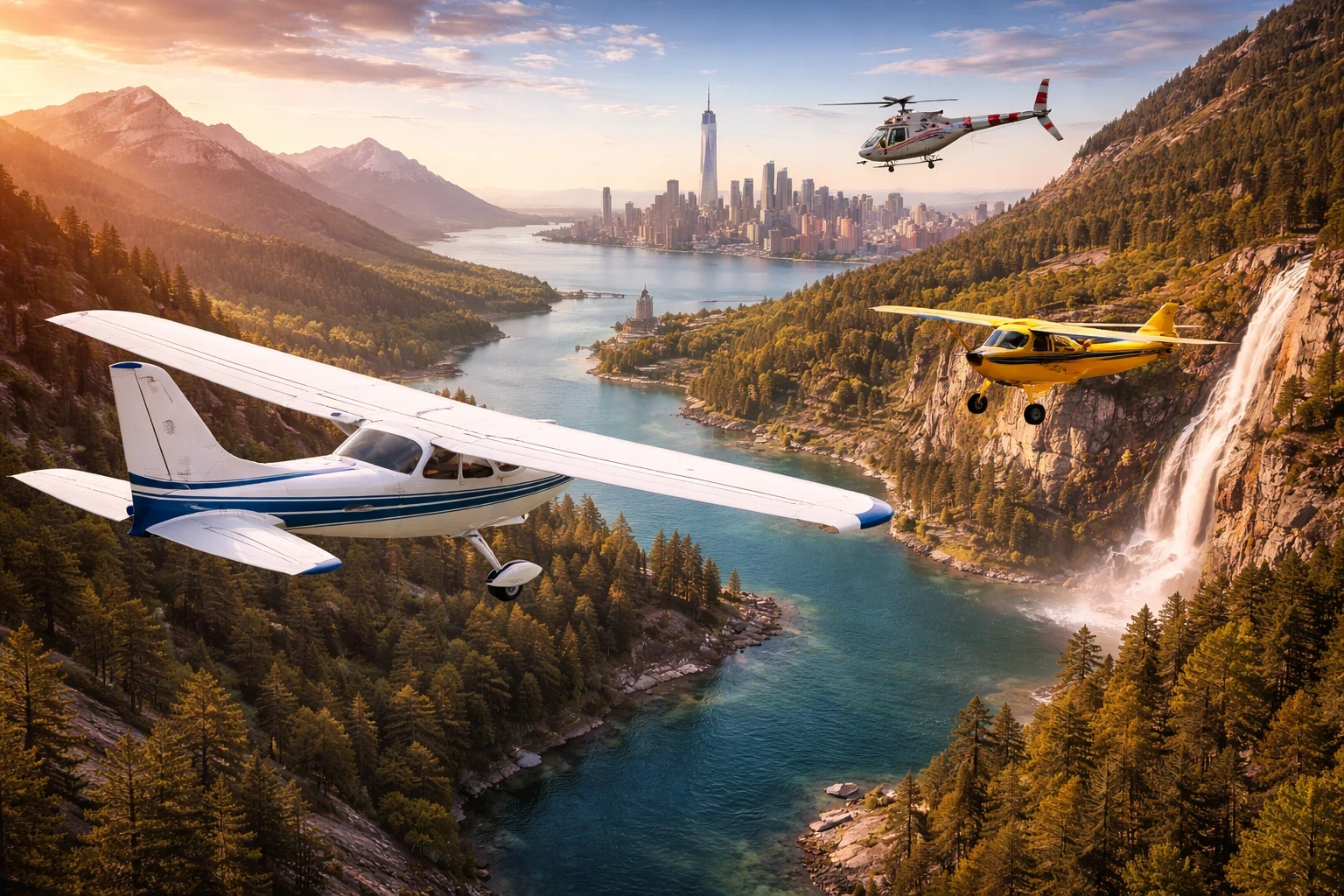
Picking the right aircraft for your virtual tour is no small deal. Your choice can seriously amp up or limit your sightseeing vibes. Whether you’re hitting up the Statue of Liberty or the lush Angkor Wat, the aircraft you take up really shapes what you see and how well you see it.
If your goal is to really absorb the details, smaller prop aircraft like a Cessna are often the better choice. They allow slower speeds, lower altitudes, and more flexibility when circling or repositioning around landmarks. These babies are perfect for flying slow and low, letting you linger around those breathtaking landmarks without rushing past.
Helicopters offer another fantastic way to enjoy scenic exploration. The hover ability? Game changer. You can pause and take a real look, circling around points of interest and getting a 360-degree view without hassle. They’re perfect for those tighter spaces where planes might not give you the full picture.
Each aircraft has its quirks, though. Jets might sound like fun, but they tend to zip past too quickly for serious sightseeing. If high-speed isn’t what you’re aiming for, keep them parked.
Ultimately, the best aircraft depends on what you want from your trip. For virtual pilots new to scenic flying, starting with a more manageable, slower aircraft usually guarantees a better experience.
✈️ My Experience Exploring the Grand Canyon in X-Plane 11
When I flew over the Grand Canyon in X-Plane 11, I immediately realized how important speed control is during scenic flights. The canyon walls, the curves of the valley, and the river below looked incredible, but they also came up quickly when flying at higher speeds. I reduced the throttle to slow the aircraft down, which made the scenery much easier to enjoy and gave me more reaction time while turning through the tighter sections of the canyon. Flying slower not only made the experience more enjoyable, but it also helped reduce the risk of clipping the terrain during sharp turns. It’s a great example of how simply lowering your speed can turn a normal flight into a smooth, safe, and immersive sightseeing tour.
✈️ My Beechcraft Baron 58 Flight Over the Eiffel Tower – Paris, France
After flying over the Grand Canyon, I decided to explore another iconic location—the Eiffel Tower in Paris. For this flight, I used the Beechcraft Baron 58 in X-Plane 11 and stayed at a low altitude to capture more detail around the city.
I reduced speed to enjoy the scenery and made gentle turns to stay aligned with the tower and nearby landmarks. Paris looked incredibly realistic from the cockpit, and the Baron 58 felt stable and smooth during the entire flight.
Here’s a short clip from that flight:
✈️ Exploring the Great Pyramid of Giza from the Air
During another scenic flight in X-Plane 11, I explored the area around the Great Pyramid of Giza. After installing the required scenery libraries, the pyramid appeared correctly in the simulator, making the location much more recognizable from the air. Flying at a slightly reduced speed helped me circle the area more safely and enjoy the view of the desert landscape and surrounding plateau.
Transformations Through Time: Lighting and Atmospheric Effects
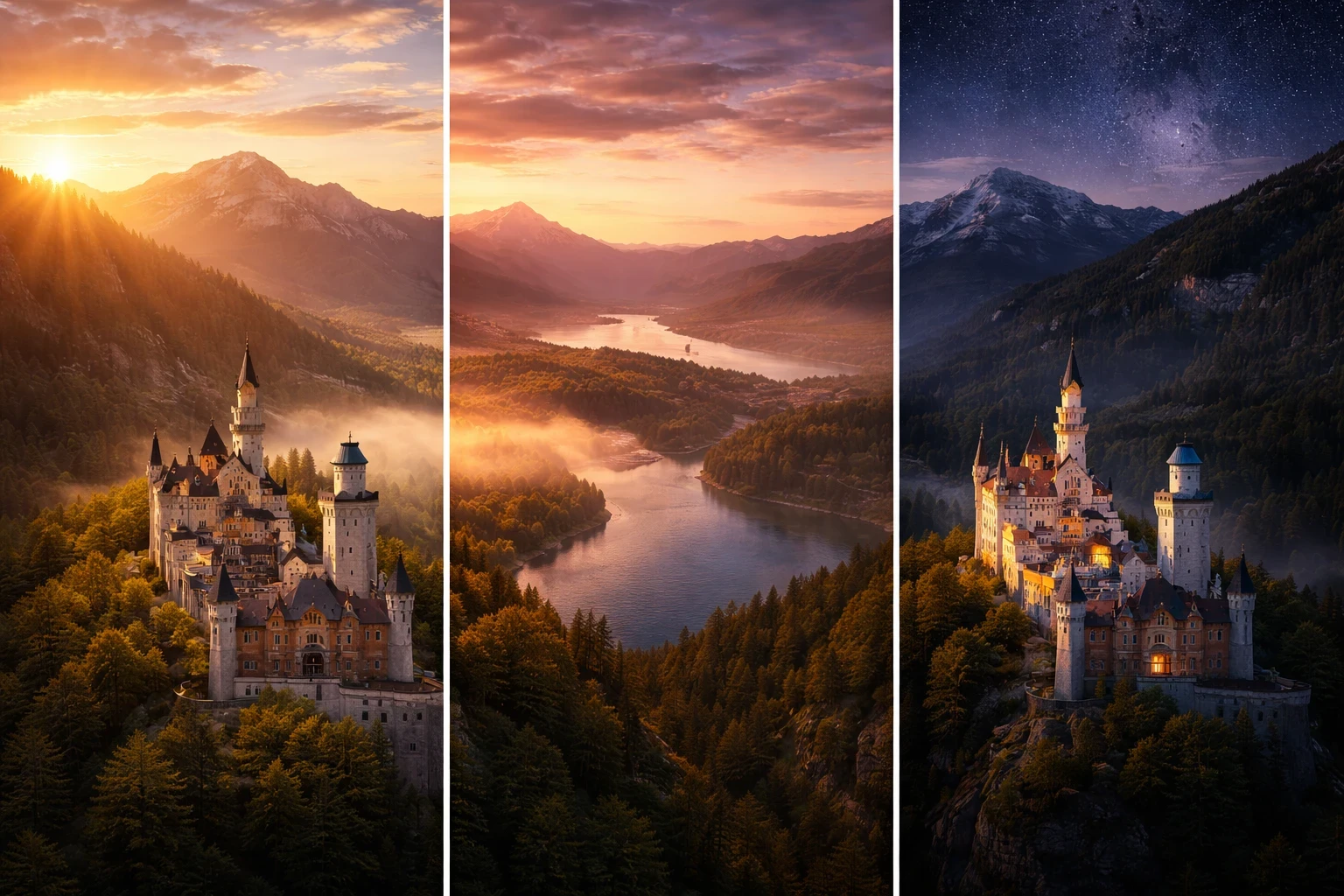
The time of day can change everything when you’re virtually swapping pleasantries with iconic landmarks. Think about it—you wouldn’t want to miss the shadowy allure of the Colosseum at dusk or the vibrant colors that light up the Taj Mahal at sunrise.
Lighting conditions practically weave magic into the whole experience. Different times of day highlight distinct architectural nuances, making the monumental feel that much more monumental. Early mornings or late afternoons can give you those long shadows and vibrant hues that are perfect for snapshots.
Weather changes add another layer to this multiple-choice game of visual splendor. Rainy weather can create dramatic skies casting moody looks onto Machu Picchu or give the Christ the Redeemer statue a misty mystery that’s just spellbinding.
Different lighting also means you get a fresh perspective every time you log in. Testing varied settings can really bring out unique angles you might not notice otherwise. Twilight, midday, or the golden hour—each tells a different story.
So, don’t just stick to one type of light or weather. Mix it up to discover how these famous spots transform under different environmental conditions. With each shift in the sky, you unlock new experiences and visuals that are worth every minute you spend flying.
From Default to Dynamic: The Impact of Enhanced Scenery
Default scenery in flight simulators is decent, but once you switch to enhanced add-ons, it feels like you’ve swapped from VHS to HD.
These enhancements offer more detailed textures and improved visuals of landmarks, turning your virtual flight into an epic visual adventure.
Mod add-ons bring an insane level of detail to structures and natural landscapes. You get to witness everything from the texture of ancient bricks on the Great Wall to the swirling sands around Petra in much higher clarity. It’s like dusting a layer of dull haze off the simulator world to see it in its true form.
Educational value takes a hike too. With enhanced scenery, every flight becomes a learning journey. You can explore, understand, and even research landmarks with greater precision, enhancing both the sightseeing and the learning aspect. It’s as if the world is one big classroom, and you’re circling the globe discovering historical architectures.
For many, swapping out default scenery for enhanced options is what makes flight simulation so rewarding. Each flight carries the potential to learn something new while enjoying an upgraded visual treat. While it might require some extra setup, the experience is absolutely worth the effort. Dive in, explore, and let each world’s wonder speak for itself through these add-ons.
Exploring the world virtually through simulators adds a unique layer of satisfaction and curiosity that just keeps you coming back for more. In the end, flying over world wonders virtually isn’t just about logging flight hours. It’s about gaining a new perspective on the planet—one that blends aviation, geography, and exploration into a single experience that keeps you coming back.
A Different Way to Experience the World From Above
Flying virtually over world wonders offers something that goes beyond standard routes or procedures. It changes how you interact with the simulator itself. Instead of focusing on destinations as endpoints, the journey becomes the highlight—how the landscape unfolds beneath you, how landmarks appear gradually, and how altitude, speed, and lighting shape what you see.
This way of flying turns the simulator into more than a technical tool. It becomes a way to observe geography, architecture, and terrain from a perspective that isn’t easily accessible in real life, especially when viewed through the broader evolution of flight simulation over time.