
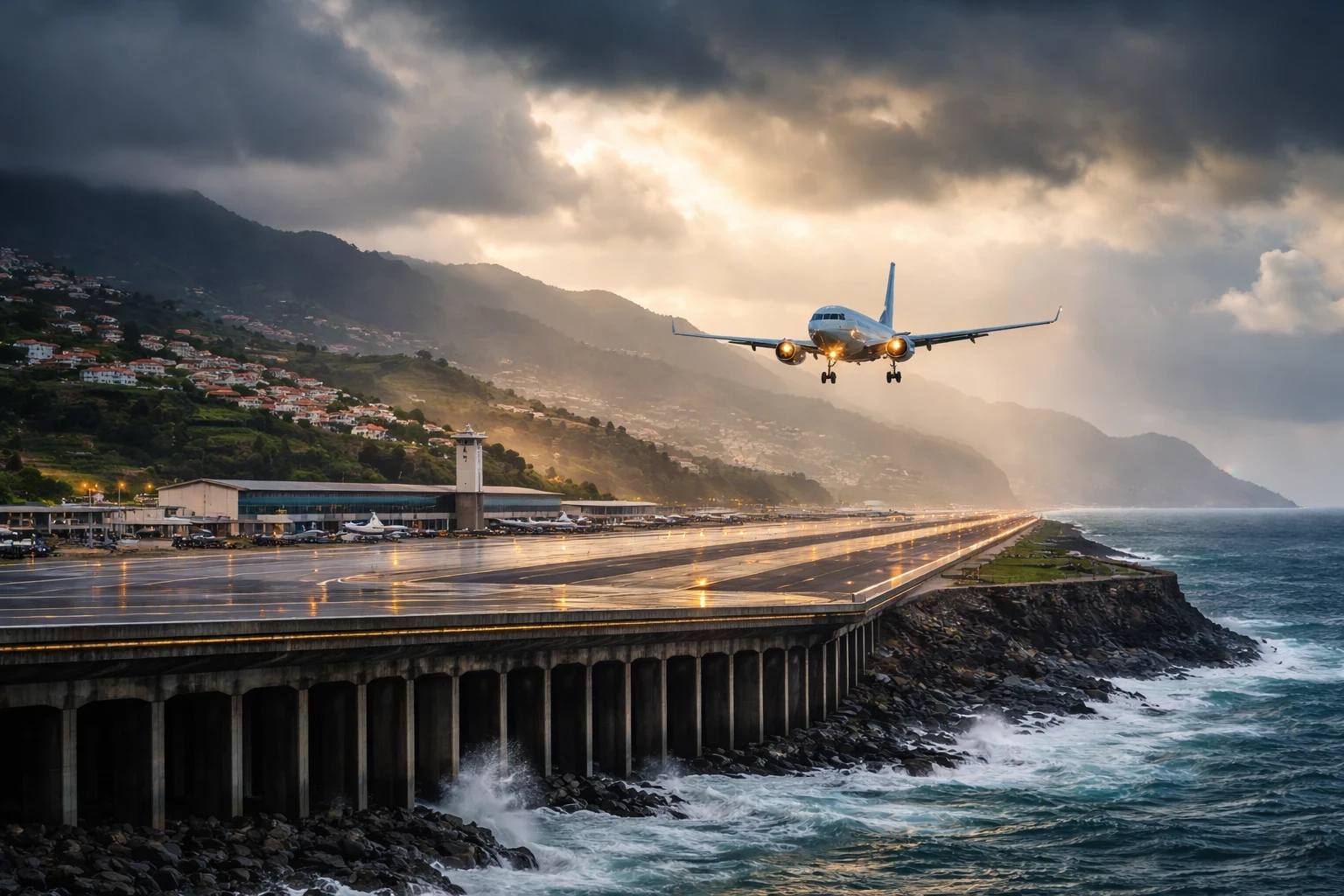
Flying into Madeira is like balancing on the edge of a knife, thanks to those unpredictable Atlantic crosswinds. They’re not just gusty—they can shift direction in a heartbeat. It’s the perfect playground for sharpening your crosswind skills, especially if you enjoy an approach that keeps you fully engaged from start to finish.
According to the FAA Airplane Flying Handbook, proper crosswind correction is one of the most essential components of landing technique. To build even more confidence in crosswinds, have a look at Improving Your Landings.
The real magic happens when you embrace the crab technique. This means pointing the nose into the wind with the wings level, so the airplane doesn’t drift. But that’s not all. During the flare—the last few feet before touchdown—you’ll need to kick in some rudder to straighten the nose with the runway. Sounds tough? It is, but when you nail it, it feels amazing.
Getting the gust factor just right is another puzzle. You add half the gust speed to your approach speed to keep things stable. It’s like threading a needle. Everything needs to be right on cue or you’ll end up in the weeds. Keeping a stabilized approach is critical here. It’s all about being centered, both in the plane and in yourself. To simulate authentic wind conditions, many pilots use real-time data from the NOAA Aviation Weather Center.
Now, if you’re picking your go-to sim setup, you might wanna try PMDG or X-Plane. They’ve got the realism you need to practice against winds that come at you like a boxer in the ring. Test out narrow-body jets like the Boeing 737 when you’re simulating. It’s the perfect mix—challenging but manageable, giving you the room to polish your technique.
These winds will teach you a thing or two about precision and being adaptable. So, get on your sim, adjust those yokes, prep your rudder pedals, and conquer that approach just like the seasoned pro you aim to be.
Density Altitude Challenges: Lukla Airport’s High-Altitude Mastery
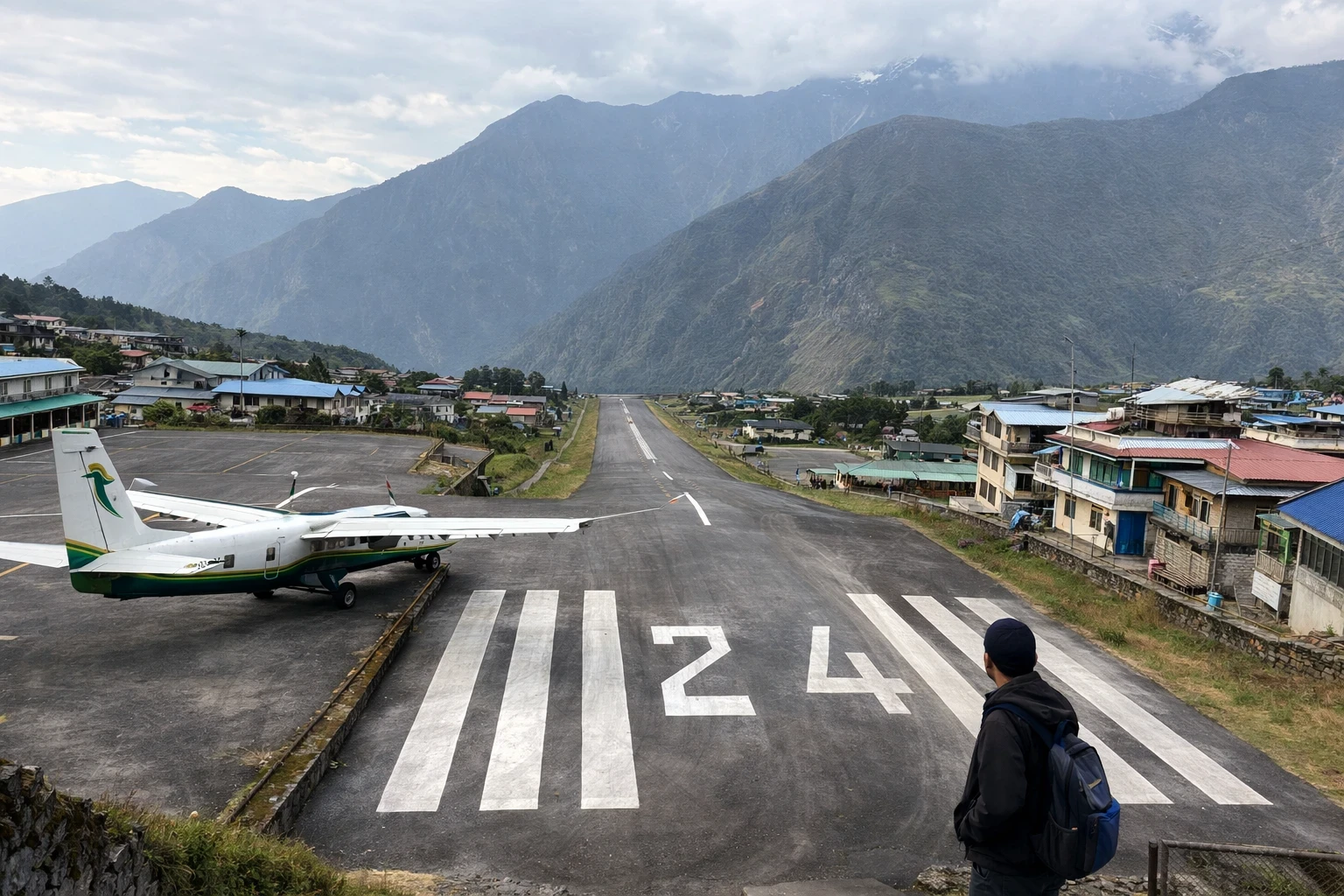
Talk about a high-stakes environment—landing at Lukla Airport is in its own category. Sitting over 9,000 feet above sea level, it pushes both the aircraft and the pilot in ways you don’t experience at lower altitudes. With thinner air reducing engine power and climb performance, your usual habits don’t work here. It becomes all about managing energy smoothly and respecting how differently the aircraft behaves in high-altitude conditions. A great reference for understanding these effects is the Skybrary article on density altitude. For additional insight on handling extreme flying conditions, you can find out more in Emergency Procedures.
At this elevation, everything feels different. Engines don’t produce as much power because of the reduced air density. Your climb rate decreases and landing distances stretch out like elastic. This means you can’t just yank the joystick back and expect to soar. It’s about managing energy and your ascent becomes more of a gentle coaxing rather than a bold lift-off.
Lukla’s short runway doesn’t offer much forgiveness. You gotta commit and land right the first time. Go-arounds? Good luck with that. The runway slopes, adding another twist to the already high-pressure scenario. The key here is energy management—keep enough speed as you’re coming in while being ready for any last-minute runway adjustments. If you want to sharpen your terrain-based navigation skills, click here for our Precision Navigation guide.
Simulator-wise, Aerosoft’s Lukla package is your ideal partner for nailing these challenges. It’s got all the details to make your practice sessions as real as they get. For aircraft, a Twin Otter is your best friend here. It’s nimble and handles short takeoffs and landings like a champ.
Nailing landings at Lukla isn’t just about technical skill; it’s about having the guts to face a unique set of challenges over and over. So, crank up that simulator and let the high-altitude experience teach you some lessons of adaptation and finesse.
Safely Manoeuvring Through Gusty Winds at Wellington International Airport (NZWN)
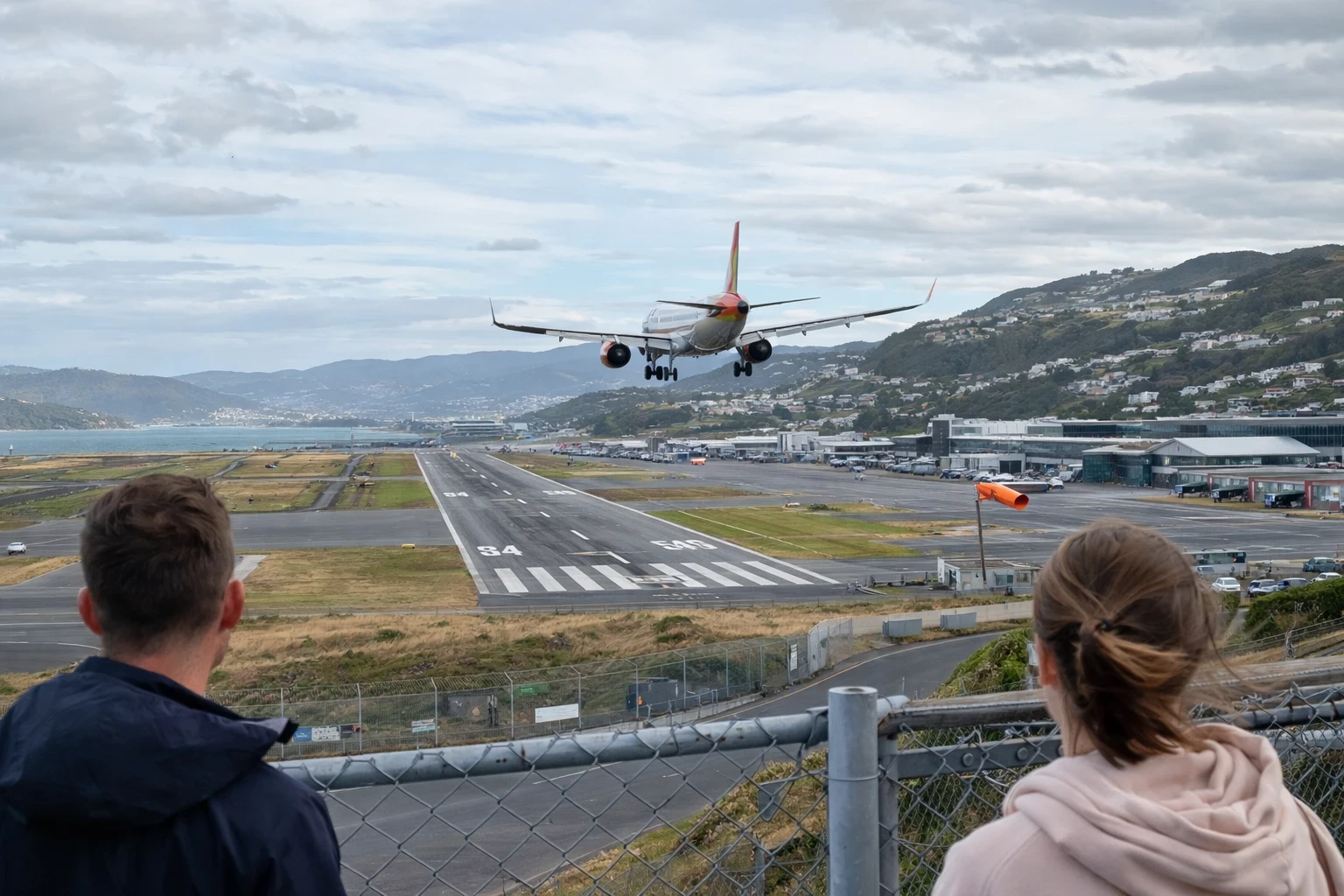
Wellington International feels like flying through a natural wind tunnel carved between hills. The gusts rushing through can hit hard and change direction quickly, turning every takeoff and landing into a focused exercise in precision. It’s a place where staying ahead of the aircraft really matters, and where smooth, confident control inputs make all the difference.
Speed and directional control become your best buddies here. Each takeoff and landing is an exercise in keeping calm while every gauge is swinging. Crosswind landings aren’t just skillful—they’re almost artful when done right. Getting your aircraft lined up despite the buffeting is key to your success.
The pressure ramps up as you glide in for the landing. Those gusts playing with your wings? They’re demanding you stay razor-focused on maintaining alignment with the runway. Your corrections must be decisive but smooth—jerky movements are a no-go. For more help aligning sim technique with real-world skills, you can visit our ATC Communication Guide.
For simulation enthusiasts, AeroFly and FS2020 are prime choices to replicate those famous Wellington winds. These platforms offer that realness factor that gets you ready for the challenges lurking at NZWN. Shifting to narrow-body jets like an A320 provides just the right challenge and showcases the power of skill in action.
Wellington’s gusty nature is a proving ground. It transforms routine flights into flying feats that test your limits but also sharpen your precision and decision-making abilities. Amp up those simulator settings and bring your crosswind A-game next time you’re in the virtual cockpit.
Rainy Seasons in the Caribbean: Navigating Wet Runways at Princess Juliana International Airport (TNCM)

When heavy rain moves across Princess Juliana International, the approach becomes a real test of timing and judgment. Trade winds mixing with those sudden downpours force you to stay sharp, adjusting for visibility, descent rate, and the effect of wet runway conditions all at once. It’s a great chance to practice accurate flare timing and disciplined braking when the surface isn’t giving you much grip.
Strategizing for wet surfaces involves juggling multiple factors. First, you’ve got the interplay of trade winds mixing with those heavy sheets of rain. It throws a curveball at your descent, where timing and execution matter the most. It’s about hitting that magical balance where instruments guide you and instincts prevail.You can explore more scenic yet challenging locations, you can click here to read our World Wonders flight guide.
In the heart of these conditions, flare timing becomes your storyline. Mistime it and run the risk of overshooting. The slick runway impacts braking performance, so pre-landing groundwork is crucial. It doesn’t end when wheels touch down; maintaining control is a priority as you tax towards the end of that wet surface. For trusted guidance on how wet and contaminated runways affect landing performance, refer to the FAA’s Operational Landing Distances for Wet Runways (AC 121.195-1A).
Get comfortable with FS2020’s real-weather features to load these scenarios into your practice sessions. This immersive experience optimizes your runway management skills under various weather challenges.
The Boeing 757 or mid-range Airbus models are stellar choices here. Their systems lend well to practicing those meticulous weather adaptations. When you get it just right, you walk away with the knowledge that not even rainy skies can cloud your sim-flying prowess.
Encountering Low Ceilings: IFR Precision at Juneau International

Juneau International brings IFR flying to the front seat, with low ceilings, rugged terrain, and unpredictable Alaska weather shaping every decision. This is where instrument skills truly matter. Tracking the ILS, managing your descent profile, and preparing for a missed approach all come together in a way that makes Juneau feel both challenging and rewarding for sim pilots aiming to improve their precision. Missed approaches here require careful planning, especially in mountainous regions. Skybrary also provides practical guidance on terrain awareness and flying in mountainous environments. You can build solid IFR foundations through our IFR Masterclass.
Navigating these skies means working with low ceilings and the watchful eye on surrounding terrain. ILS approaches become your go-to, so getting intimate with instrument readouts turns vital. It’s all about having a steady hand and a keen eye to manage that needle dance and ensure you’re on the right path.
Missed approach procedures are more than just a backup plan—they’re a well-rehearsed ballet. Prepar3D is top-notch for mastering those key sequences when visuals aren’t your companion, ensuring your IFR game is on point in treacherous environments. A more advanced look at procedure handling is available in our Emergency Procedures guide.
Turbulence plays spoiler during approaches, which calls for impeccable aircraft control and a knack for smooth corrections. Practicing with an aircraft like the CRJ or Embraer jets will allow you to master the finesse needed in these scenarios.
In this mix of terrain and weather, Juneau elevates your sim experience, crafting you into a pilot who not only thrives on challenges but confidently cruises through them.
✈️ Continue Building Your Weather-Flying Confidence
Weather challenges like crosswinds, low ceilings, and high-altitude approaches do more than test your reactions—they shape you into a more adaptable, thoughtful virtual pilot. Every tricky descent and every gusty landing adds another layer of skill that carries into everything you fly.
If you’d like to keep sharpening those fundamentals, you can explore our guide on Improving Your Landings.
Choose your next destination, load up your simulator, and keep pushing your abilities forward—one challenging approach at a time.